


White House comments widen a public rift with a close ally
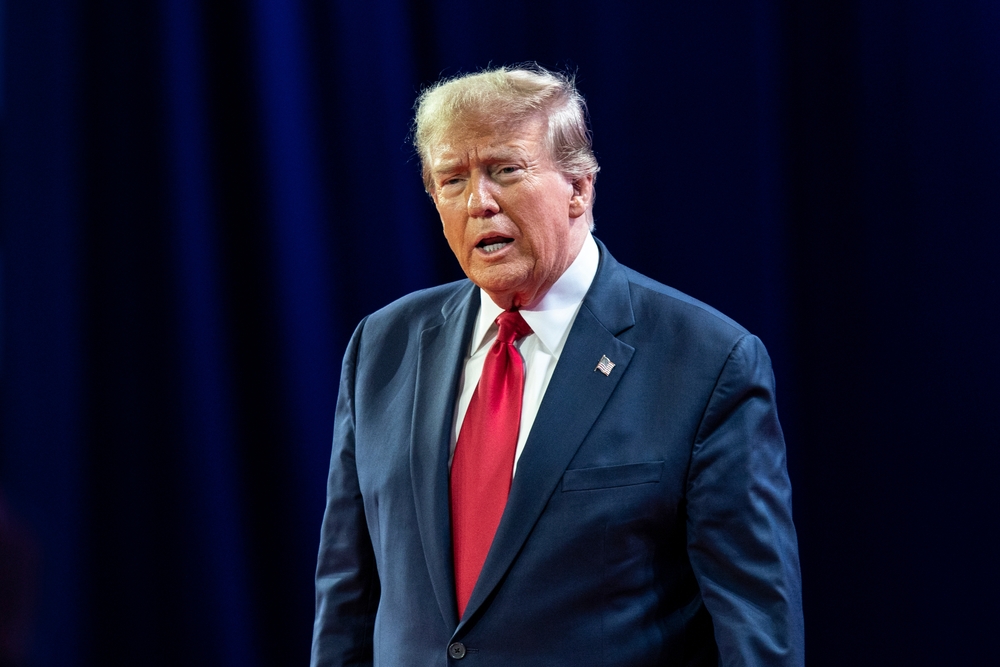
President Donald Trump publicly rebuked British Prime Minister Keir Starmer on Tuesday, escalating tensions between Washington and London as the U.S. air campaign against Iran raises unease among some allied governments. Speaking at the White House, Trump compared Starmer unfavorably to Winston Churchill, saying, “This is not Winston Churchill that we’re dealing with,” a remark aimed at Britain’s limited participation in the strikes.
The comments marked Trump’s third broadside against Starmer this week, according to the account provided. They came as U.S. strikes and the risk of wider regional escalation have pushed allied leaders to weigh military coordination against domestic political pressures and legal constraints. The dispute also highlighted a broader pattern in Trump’s approach to alliances, in which he has criticized European partners over immigration policy, defense spending levels, and their stance toward far-right movements.
In Europe, those dynamics have fed concerns about the durability of transatlantic cooperation at a time of heightened security threats, including those linked to Russia. Trump’s posture on Ukraine and earlier threats involving Danish territory have also contributed to doubts among European officials about longer-term U.S. reliability.
UK stance: no direct participation, limited support and basing access
Starmer has said Britain did not join the U.S.-Israeli assault on Tehran because any British military action must have a viable plan and because he does not support what he described as regime change achieved through air power. At the same time, Britain has provided a form of operational support by allowing the U.S. to use UK bases for what Starmer characterized as limited and defensive strikes intended to reduce Tehran’s capabilities after Iran hit U.S. allies in the region with drones and missiles.
The account also noted an additional pressure point for the UK government. On Monday, a British base in Cyprus was struck by a drone that Cypriot officials said was likely launched by Hezbollah, a Lebanese group backed by Iran. The incident added urgency to force protection and escalated the sense that facilities associated with U.S. and allied operations could face direct risk.
Trump’s criticism, however, centered on what he framed as insufficient cooperation and delays tied to British decisions around basing and logistics. His remarks suggest he views UK caution as a practical hindrance during a high-tempo operation, while Starmer has argued that legality, planning, and national interest require restraint.
Diego Garcia dispute becomes a focal point for frustration
During a White House meeting with German Chancellor Friedrich Merz, Trump voiced frustration that the U.S. had not been able to land military jets at the UK-linked base at Diego Garcia, describing it as strategically important. He said, “I’m not happy with the UK,” and complained that it had taken several days to determine where U.S. aircraft could land, adding that it would have been more convenient to use Diego Garcia rather than flying many extra hours.
The episode drew attention to the Chagos Archipelago, which includes Diego Garcia and has been the subject of a sovereignty agreement. The Trump administration had previously supported a UK government deal to cede sovereignty of the islands, while retaining control of the Diego Garcia base under a 99-year lease. Trump later reversed course, calling the decision to transfer the islands to Mauritius an act of weakness. On Tuesday, he revisited the issue again, criticizing the UK for what he described as uncooperative behavior related to “that stupid island” and the decision to give it away, according to the account.
The dispute is significant because it connects short-term military needs with longer-term questions about basing rights, alliance coordination, and political messaging. For London, the challenge is to maintain operational ties with Washington while limiting exposure to accusations of unlawful action and managing public opinion at home.
Special relationship narrative tested by politics and public opinion
Despite Trump’s broader friction with Europe, the U.S. president and the UK’s center-left Labour leader had recently maintained a more positive personal relationship. Britain has long emphasized its “special relationship” with the United States, anchored in intelligence sharing and military coordination and historically strengthened by close ties between leaders across the Atlantic.
Trump suggested that relationship has weakened. In an interview published Tuesday, he said it was sad to see the relationship was not what it had been, and he praised France and Germany while describing Britain as a reluctant partner. Britain, France, and Germany issued a joint statement after Iranian attacks on Saturday, saying they were in close contact with the United States, Israel, and regional partners and calling for renewed negotiations.
Starmer faces pressure across the political spectrum at home. Opponents on the left have urged him to condemn the strikes. On the right, opposition figures Kemi Badenoch and Nigel Farage criticized him for not fully backing what they view as Britain’s key security and intelligence ally. Starmer, a former lawyer, defended his approach in parliament on Monday, saying he had to judge what was in Britain’s national interest and that he stood by the decision.
Public opinion data adds another constraint. A YouGov poll published Tuesday showed opposition in Britain to the U.S. strikes on Iran at 49%, compared with 28% in support. Senior minister Darren Jones linked Starmer’s caution to lessons from the 2003 Iraq war, arguing that involvement should come with alignment among international partners and a clear legal basis.
The clash leaves the UK balancing three pressures at once: maintaining security cooperation with Washington, managing the legal and political risks of association with strikes, and responding to public skepticism. For the U.S., Trump’s approach signals a willingness to apply public pressure to allies on operational support, even as he seeks to sustain a coalition during an escalating conflict.