


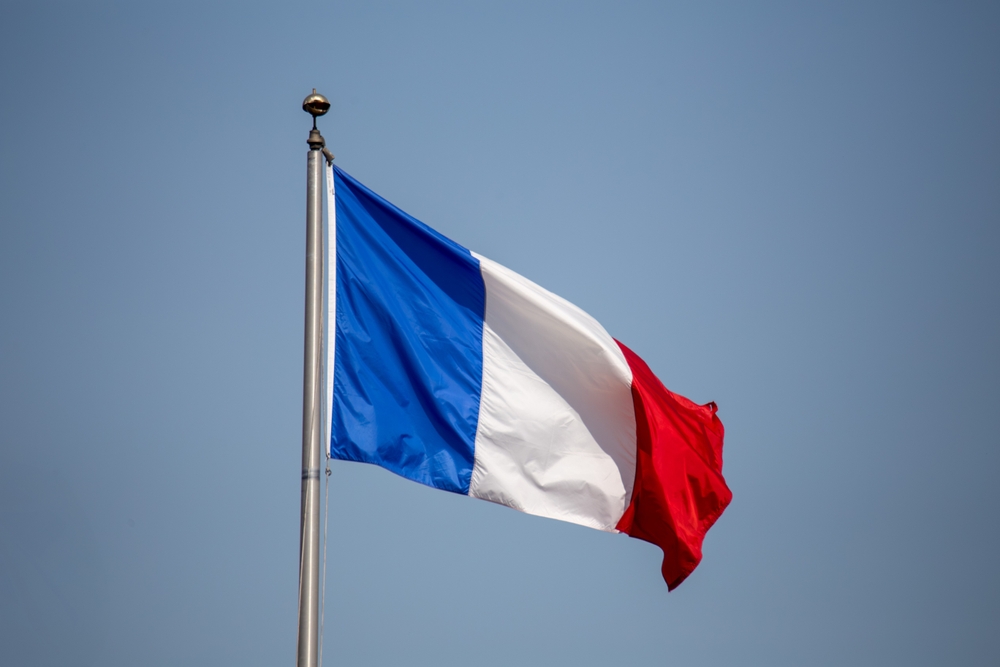
Macron links arsenal shift to a more volatile security era
France will increase the size of its nuclear arsenal and broaden the role of its deterrent in Europe, President Emmanuel Macron said in a major policy shift framed as a response to a deteriorating strategic environment. Speaking in Brittany to naval officers in front of a nuclear submarine at the Ile Longue base near Brest, Macron argued that the coming decades will be defined by renewed nuclear risk and that France must adapt.
“The next 50 years will be an era of nuclear weapons,” Macron said, setting the tone for a doctrine intended to raise uncertainty for potential adversaries while strengthening European partners’ participation in deterrence planning. He said France will increase its stockpile from a current level of around 300 nuclear warheads, and he announced that France will stop publicly disclosing the number of warheads it holds.
The president also set a long-range modernization marker. He said a new nuclear-armed submarine called The Invincible will be launched in 2036, signaling sustained investment in the sea-based component of France’s deterrent.
Advanced deterrence invites eight partners into exercises and basing
Macron said eight European countries have agreed to participate in a new framework he described as an “advanced deterrence” strategy. The countries he named were the UK, Germany, Poland, the Netherlands, Belgium, Greece, Sweden and Denmark. Under the plan, partners could take part in exercises involving France’s air-launched nuclear capability, the force de frappe, and could host air bases where French nuclear bombers could be stationed.
Macron said this dispersal would allow France’s Strategic Air Forces to “spread out across the depth of the European continent” and “thus complicate the calculations of our adversaries.” The intent is to improve survivability and operational flexibility while increasing the ambiguity that deterrence theory treats as a central feature of credibility.
Polish Prime Minister Donald Tusk welcomed the announcement in a post on X, writing: “We are arming up together with our friends so that our enemies will never dare to attack us.” The comment illustrates how some governments are positioning the French move as an additive layer of protection amid heightened threat perceptions.
No shared launch authority as Paris keeps sole decision power
French officials described the initiative as the most significant change in strategic thinking since 1960, while insisting it still preserves core elements of the original doctrine associated with President Charles de Gaulle. The most sensitive line remains unchanged: France will not provide an explicit nuclear guarantee to partner countries, and the French president will retain sole authority over any decision to use nuclear weapons.
Macron stressed that the objective remains to deter by threatening intolerable costs. He said the aim is to convince any potential adversary that “if they have the audacity to attack France, there will be an unsustainable price to be paid.” The policy continues France’s tradition of leaving “vital interests” deliberately undefined, a choice meant to keep opponents uncertain about the threshold that would trigger a nuclear response.
In recent years, French governments have hinted that those vital interests could extend beyond national borders to include European interests. Macron’s advanced deterrence gives that idea more structure without spelling out automatic responses, aligning with deterrence logic that relies on uncertainty rather than contractual precision.
New auxiliary tools and tighter Berlin coordination
Beyond nuclear exercises and potential basing, Macron said partner countries would also share in the development of auxiliary capacities intended to strengthen overall deterrence. He cited space-based alarm systems, air defense capabilities designed to intercept incoming drones and missiles, and long-range missiles. The framing suggests France is pairing nuclear signaling with conventional and enabling systems that can improve early warning, resilience, and response options.
The announcement also landed alongside new bilateral coordination with Germany. Shortly after Macron’s speech, France and Germany jointly outlined plans for closer cooperation on nuclear deterrence. A text signed by Macron and German Chancellor Friedrich Merz said the two countries will take first steps this year, including German participation in French nuclear exercises and the development of conventional capacities with European partners.
The joint statement emphasized that the initiative is meant to complement NATO rather than substitute for it. “This cooperation will complement, not replace, Nato’s nuclear deterrent,” the leaders said. That language signals a balancing act: reinforcing European capability and planning while avoiding the perception of undermining the alliance’s existing deterrence architecture.
France already maintains a nuclear cooperation agreement with the United Kingdom, Europe’s only other nuclear power. UK officials have recently taken part for the first time in exercises by France’s Strategic Air Forces, an involvement that now appears positioned as a foundation for wider multinational participation.
The practical effects of Macron’s policy will depend on how exercises are structured, which bases are selected, and how auxiliary systems are funded and integrated. The political effects may be immediate. By raising the visibility of France’s deterrent and offering partners a role in training and posture, Paris is signaling that European security planning is moving toward deeper coordination even as decision authority remains centralized in the French presidency.