


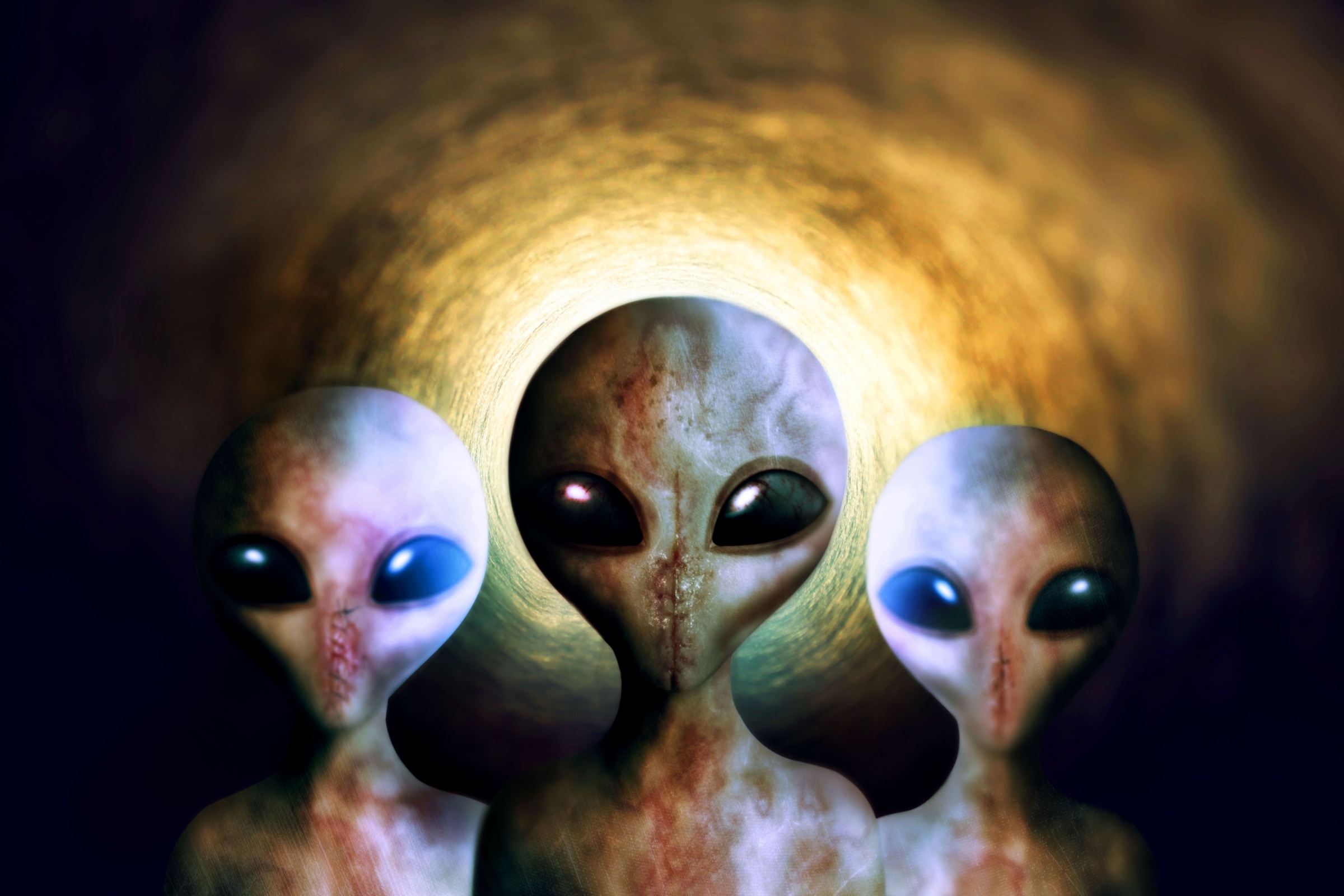
If intelligent life exists elsewhere, it will live inside the same cosmos we do. The same stars fuse hydrogen, the same atoms form chemistry, and the same gravity shapes planets. Yet that does not guarantee that aliens do physics in a way that looks familiar to human scientists.
A growing body of writing around SETI and the philosophy of science argues that “science” may reflect our minds as much as it reflects nature, especially when culture and biology steer what a species notices, values, and tries to explain.
That tension drives a deceptively simple question: do advanced aliens inevitably build theories, equations, and experiments, or could they develop powerful technology through very different traditions of knowledge? The answer matters for how humans search for signals, interpret messages, and avoid assuming that alien intelligence will meet us on our preferred terrain of math and physics.
Physics Might Stay the Same While “Science” Changes
Many researchers and communicators start from a common baseline: reality constrains everyone. Any civilization that launches spacecraft must contend with energy, momentum, radiation, and materials.
That constraint suggests that some parts of physics will converge, even if the path to them varies. SETI-focused commentary often frames physics as “shared reality,” the closest thing to common ground between minds that evolved under different suns.
But the same argument also leaves room for big differences. A species could prioritize prediction over explanation, or build rules of thumb that work locally without aiming for universal laws. Humans often treat reductionism as the default—break a phenomenon into parts, then write equations for the parts. Another intelligence might think in systems first, leaning on pattern recognition and control rather than abstract formalism.
Culture can push in the same direction. Human science grew inside institutions that reward public methods, reproducible experiments, and sharable proofs. Aliens could organize knowledge around craft guilds, ritual, or distributed biological memory, and still achieve mastery over their environment.
Biology Could Shape What an Alien Mind Counts as Evidence
Human science relies on a specific sensory toolkit. We perceive a limited range of electromagnetic radiation and hear vibrations through the air. While we employ tools to enhance our senses, we ultimately translate the universe into human-readable signals and symbols.
That translation step opens the door to divergence: alien biology might emphasize senses we barely use, such as electric fields, polarized light, magnetic cues, or chemical gradients.
If an intelligence evolved with different dominant senses, it might build “first principles” around different regularities. It might focus on fluid dynamics in a dense atmosphere, on wave behavior in oceans, or on chemical signaling networks rather than on optics and mechanics.
The result could look less like a physics textbook and more like a highly developed ecology of interactions, still rigorous, still predictive, but shaped by what that species experiences most directly.
This question also sits at the center of debates about whether math serves as a universal language. Many SETI proposals treat mathematics as the safest bridge for first contact.
Yet discussions aimed at the public increasingly ask whether humans project too much confidence onto that idea. Even if aliens share quantity and pattern, they might encode them through representations we would not recognize at first glance.
What This Means for SETI and First Contact Messages
The “physics-first” strategy remains popular for practical reasons. A signal that references prime numbers, spectral lines, or universal constants gives humans a foothold. It also fits the assumption that any technological civilization will notice the same astronomical landmarks and the same fundamental constraints
Still, first contact may not arrive as a neat page of equations. Humans might face something closer to an alien data stream: compressed patterns, strange hierarchies, or symbolic structures that only slowly reveal their logic. Some outreach projects already explore this problem by asking what it would take to decode unfamiliar symbol systems, and whether “physics” actually guarantees mutual understanding.
That uncertainty does not weaken the case for looking. Instead, it changes how scientists and communicators frame the challenge. When aliens do physics, they may reach familiar truths through unfamiliar routes, or they may package knowledge in ways that resist quick translation.
Either way, the search becomes more than a hunt for neighbors. It becomes a test of how much science reflects the universe, and how much it reflects the human way of carving the universe into concepts.