


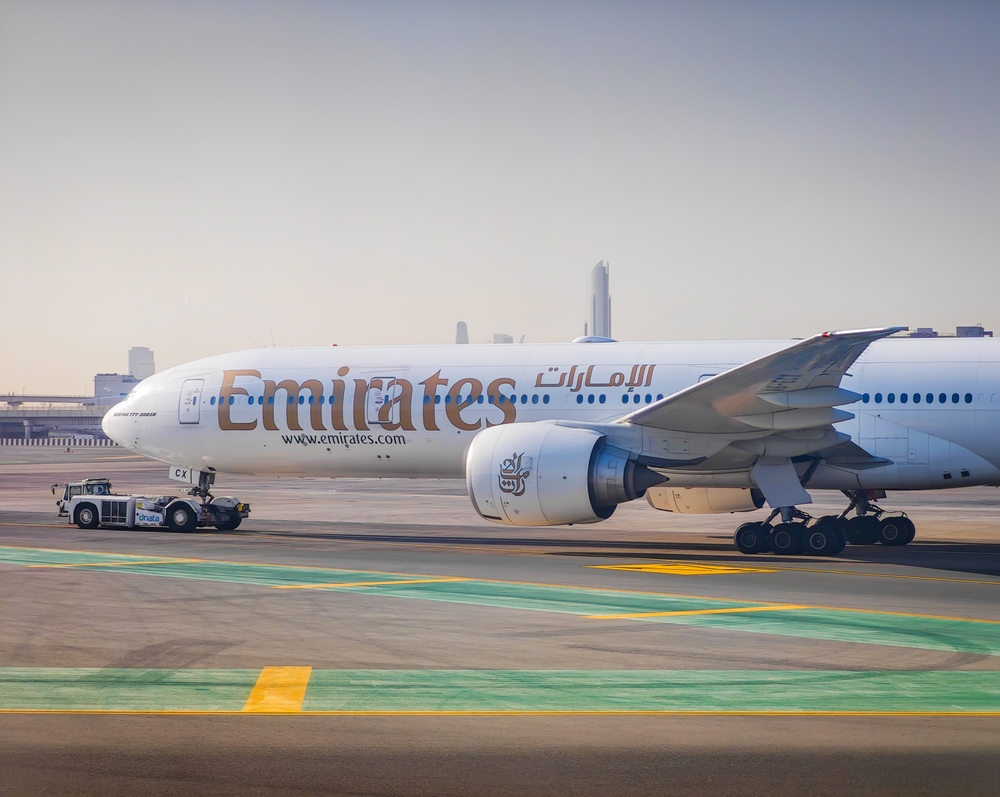
Etihad, Emirates extend suspensions and Qatar awaits update
The Middle East’s largest airlines are pushing back hopes of a quick return to normal schedules, extending flight suspensions as the U.S.-Israeli war on Iran continues to disrupt airspace and airport operations. Etihad said commercial services from Abu Dhabi will remain suspended until 2pm local time on Thursday 5 March. Emirates said it does not expect scheduled flights to resume until midnight on Wednesday.
Qatar Airways said it would provide another update on Wednesday, but its operating environment remains constrained because Qatar’s airspace is still closed to all flights. The timetable underscores how airlines are prioritizing operational and safety approvals while managing a surge of stranded travelers across hubs that normally connect Europe, Asia, and Africa.
The limited restart underway is focused on emergency movements rather than normal passenger schedules. Carriers have been operating a small number of cargo, repositioning, and repatriation flights after the damage and chaos linked to Iranian missiles and drones, with governments also coordinating departures for citizens attempting to exit the region.
Mass cancellations strand over a million passengers across the region
Travel disruption has reached a scale more typical of major weather events than regional conflict. Since Saturday, at least 11,000 flights into, out of, and within the Middle East have been canceled, affecting more than one million passengers, according to aviation analytics firm Cirium. The figures capture not only travelers headed to the region, but also those connecting through Gulf hubs on multi-leg itineraries.
Passenger movements began to resume on a limited basis from the United Arab Emirates on Monday, as evacuation flights departed and some travelers were able to leave after days of disruption. The UAE government urged passengers to go to airports only if contacted directly, warning that airport operations remain restricted.
Flight tracking data illustrated how narrow the operating window has been. Flightradar24 recorded at least 16 Etihad departures from Abu Dhabi within a three-hour period on Monday, with flights bound for destinations including Islamabad, Paris, Amsterdam, Mumbai, Moscow, and London. Emirates said customers with earlier bookings were prioritized for seats on the limited flights it began operating on Monday evening.
Airspace closures force reroutes and lift near-term ticket prices
Airspace restrictions remain widespread and uneven, making route planning difficult for airlines and reducing available seat capacity. Closures are still in effect for Iran, Iraq, and Israel, while Jordan closed its airspace overnight on Monday. Partial closures have also affected Bahrain, Kuwait, Saudi Arabia, and Syria.
The disruption is expected to affect pricing, particularly for long-haul travel. The Gulf has become a core connecting bridge between Australia and Europe, and analysts warned that fares could rise sharply in the short term as capacity is squeezed and airlines are forced into longer routings.
John Grant, an analyst at aviation data company OAG, said the loss of Middle East capacity is pushing demand onto alternative routings that are already tight. He noted that direct services to Asia are close to full because of their own local demand and their role as connecting routes to Australia. He added that with Easter approaching, capacity is scarce and fares are likely to rise and remain elevated until there is a settlement to the current events.
Governments accelerate consular warnings and evacuation planning
Political leaders and foreign ministries moved to strengthen travel guidance and support for citizens in the region. President Donald Trump said on Monday the conflict was projected to last four to five weeks but could extend longer, reinforcing market expectations that transport disruption may not be resolved quickly.
Late on Monday, the U.S. State Department urged Americans to leave more than a dozen Middle East countries, including Saudi Arabia and the UAE. Mora Namdar, the department’s assistant secretary for consular affairs, said U.S. citizens should use available commercial transportation because of safety risks. The U.S. has not organized its own evacuation flights.
In the UK, Prime Minister Keir Starmer said the government was sending rapid deployment teams to support British nationals and aimed to ensure they could return home quickly and safely. The UK foreign secretary Yvette Cooper said 130,000 British nationals have registered their presence in the region and that about 300,000 British citizens are in Gulf countries being targeted by Iran.
Australia also faces a large stranded population. About 24,000 Australian citizens are in the Middle East, with some stuck in transit. The impact is amplified by the reliance on Gulf hubs for Australia to Europe travel flows.
Germany’s foreign ministry said around 30,000 German tourists were stranded on cruise ships, in hotels, or at closed airports across the Middle East. The ministry said it plans to send aircraft to Oman and Saudi Arabia to evacuate ill travelers, children, and pregnant women while working with airlines to assist others.
On Tuesday, Europe’s largest holiday company Tui said it would begin offering return flights for its 10,000 customers stranded in the Middle East starting Tuesday, working with Etihad, Emirates, and Qatar Airways. Chief executive Sebastian Ebel told broadcaster NTV that the company expected to operate the first flights that day to bring guests home.