


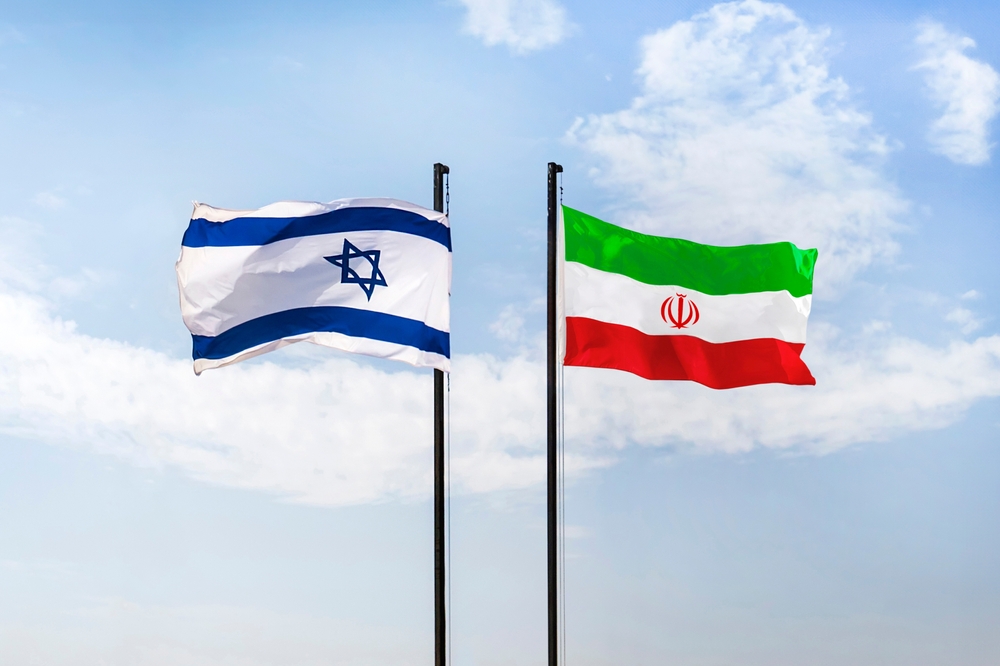
Israel targets missile sites as Iran expands retaliation
Israel said it carried out airstrikes on Tuesday against Iranian missile launchers and a nuclear research location, while Iran responded with attacks aimed at Israel and across the Gulf, including strikes on U.S. diplomatic sites. The exchanges marked a sharp escalation in a conflict now four days old that is disrupting energy supplies and air travel and raising questions about how the war could be contained.
Explosions were reported in Tehran and in Lebanon, where Israel said it struck Hezbollah militants in retaliation. Iran has launched dozens of ballistic missiles toward Israel, though most have been intercepted. Israeli authorities said 11 people have been killed in Israel since the war began. In Iran, the death toll has climbed to nearly 800, according to figures cited from the Red Crescent Society.
President Donald Trump has suggested the conflict could last weeks and possibly longer, amplifying uncertainty for markets and allied governments that are assessing secondary effects on security and trade routes.
Trump signals open-ended aims and leadership uncertainty in Tehran
Trump’s public messaging left room for broader U.S. involvement. He told the New York Post on Monday that he was not ruling out boots on the ground, while senior officials have offered shifting explanations of the campaign’s objectives. The initial U.S.-Israeli strikes killed Iran’s Supreme Leader Ayatollah Ali Khamenei, and Trump urged Iranians to overthrow their government, even as administration officials later said regime change was not the goal.
Trump said on Monday the operation has four objectives: destroy Iran’s missile capability, wipe out its navy, prevent it from obtaining a nuclear weapon, and stop it from supporting allied armed groups. On Tuesday, he said that “someone from within” the Iranian system might be best placed to take power once the campaign ends.
From the Oval Office, Trump said Reza Pahlavi, the exiled son of Iran’s toppled Shah, is not a leading option under serious consideration. He also said the people the U.S. had in mind to lead Iran are now dead. Trump acknowledged the risk that a successor could be as hardline as those removed, saying the U.S. does not want that outcome.
Iran’s leadership is moving to choose a new supreme leader, a process described as rare since the 1979 Islamic Revolution. Potential candidates were described as ranging from hardliners committed to confrontation to reformists seeking diplomatic engagement.
Nuclear claims and limited verification amid communication failures
Details from inside Iran have been difficult to confirm because of degraded communications, continuous airstrikes, and restrictions on journalists. Still, Israel said it struck production and storage sites for ballistic missiles in Tehran and Isfahan and said it destroyed what it called a secret underground nuclear headquarters. Israel said the site was used for research aimed at developing a key component for nuclear weapons, without providing evidence.
Israeli military spokesman Brigadier General Effie Defrin said Iran had tried to rebuild and conceal efforts, adding that the regime was mistaken in believing the activity would go unnoticed.
Iran has said it has not enriched uranium since June while asserting it has a right to a peaceful nuclear program. The United Nations nuclear watchdog said Iran’s Natanz enrichment site has sustained some recent damage, but said no radiological consequence is expected. The U.S. had hit Natanz during a 12-day war in June in which Israeli and U.S. strikes were described as having weakened Iran’s nuclear program.
Embassy attacks and widening evacuations deepen regional disruption
Iran’s retaliation extended to U.S. diplomatic facilities in the Gulf. Saudi Arabia’s Defense Ministry said two drones struck the U.S. Embassy in Riyadh, causing a limited fire, and the embassy urged Americans to avoid the compound. The incident followed an attack on the U.S. Embassy in Kuwait. U.S. embassies in Saudi Arabia, Kuwait, and Lebanon said they were closed to the public.
The U.S. State Department ordered the evacuation of non-emergency personnel and family members from Kuwait, Bahrain, Iraq, Qatar, Jordan, and the United Arab Emirates. The department also urged Americans to leave more than a dozen Middle Eastern countries, though widespread airspace closures have left many travelers stranded. The State Department said Tuesday it is preparing military and charter flights for Americans seeking to depart the region, while other countries have also arranged evacuation flights.
Casualty reports across the region reflected the broader scope of attacks. The Red Crescent Society cited at least 787 deaths in Iran. In Lebanon, the health ministry said 40 people were killed, including seven children, in strikes linked to retaliation against Hezbollah, revising an earlier count of 52. The U.S. military confirmed six American service members were killed. Additional deaths were reported in the Gulf, with three people killed in the United Arab Emirates and one each in Kuwait and Bahrain.
Turkish Foreign Minister Hakan Fidan criticized Iran’s attacks on Gulf neighbors that had sought to prevent war, calling the strategy deeply flawed and warning it could widen the conflict if those states retaliate.