


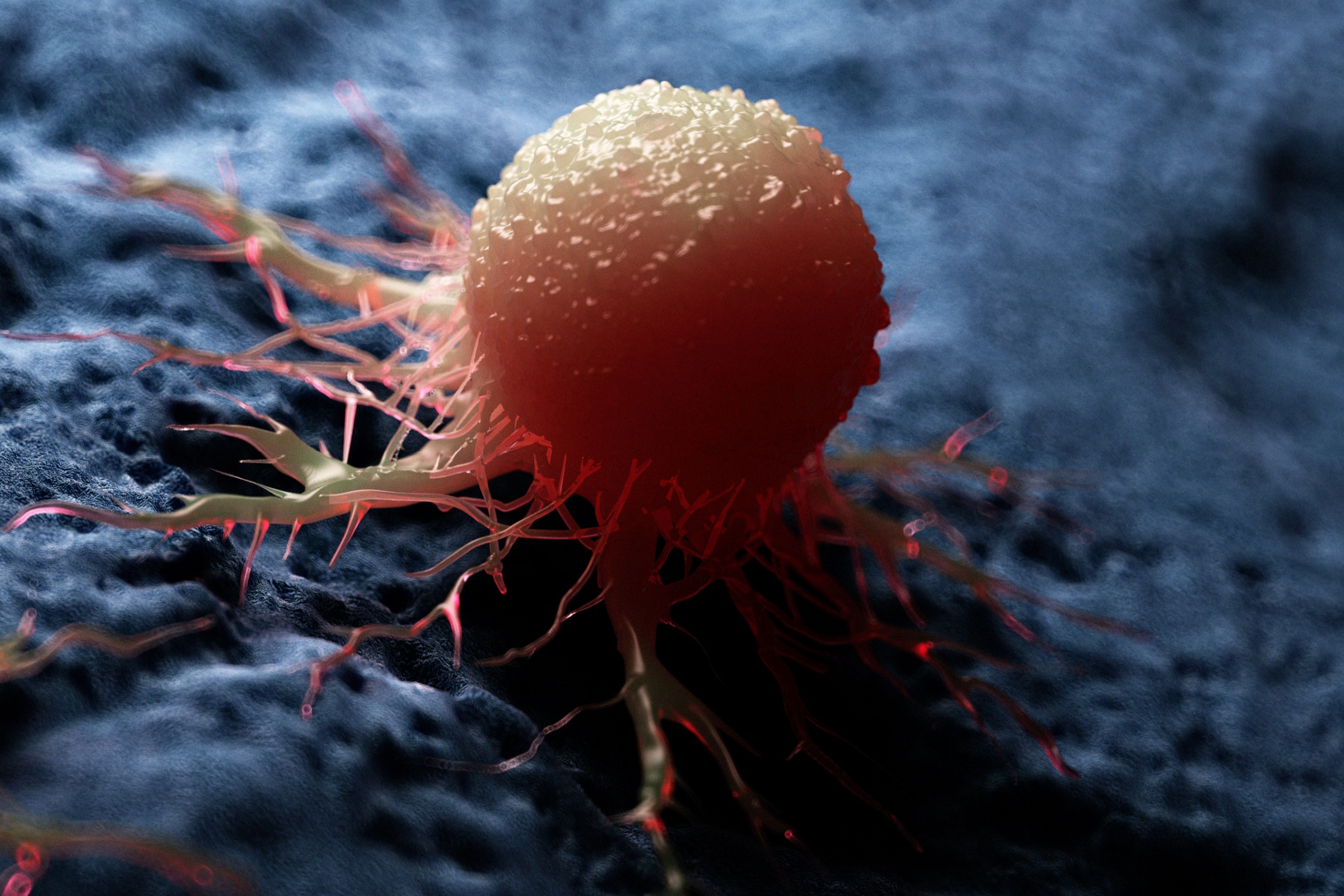
Scientists have debated a basic claim behind urine-based liquid biopsies: can tumor-derived extracellular vesicles in urine truly come from cancers far away from the urinary tract? A new study says yes, and it follows the particles step by step in mice.
Small extracellular vesicles (sEVs) act like tiny membrane-wrapped packages that cells release into body fluids. They often carry RNA and proteins that mirror the cell that produced them, which makes them attractive as cancer biomarkers.
Yet the biology looked awkward. Many references describe the kidney’s glomerular filtration barrier as highly selective, with a cutoff around 8 nanometers, while sEVs often measure 30–200 nanometers. That size gap raised doubts that intact tumor vesicles could reach the urine under normal conditions.
Two Molecular “Tags” Follow Vesicles Across the Body
A team led by Takao Yasui at the Institute of Science Tokyo, and Ryosuke Kojima at the University of Tokyo set out to test the route directly. They reported the results in Science Advances (published Feb. 20, 2026) using mouse models of brain, lung, and pancreatic cancer.
The researchers built two independent tracking systems to verify the story from different angles. In one approach, they engineered glioma (brain tumor) cells to release vesicles carrying a custom RNA tracer, enabling them to detect tumor-linked sEVs with high sensitivity.
In the second approach, they modified lung and pancreatic tumor cells to produce vesicles tagged with a dual luminescent and fluorescent reporter protein. That tag helped the team quantify vesicles in fluids using established microscopy-based methods.
With both systems, the team traced vesicles from tumor sites into circulation and then into urine. Across the models, the tumor-derived signal was consistently detected, and the urine signal was higher than the blood plasma signal in the mice.
The Kidney Acts Like a Gatekeeper, Not a Simple Sieve
The most important shift in the study sits in the kidney. Instead of treating the glomerulus as a passive filter that simply blocks “too-large” particles, the team tested whether kidney cells actively handle these vesicles.
They combined cell experiments with a “glomerulus-on-a-chip” device that mimics kidney filtration under flow conditions. Those tests showed that glomerular cells take up circulating sEVs and transport them across the filtration barrier via transcytosis, a transport process cells use to shuttle cargo from one side to the other.
The team also reported that some vesicles changed in size and surface composition during passage, suggesting that the kidney may process them rather than simply letting them slip through unchanged.
Yasui summarized the implication in the release: the work “redefine[s] the glomerulus as an active regulator of sEV processing” and supplies a mechanism that supports urinary liquid biopsy.
What It Could Mean for Urine-Based Cancer Testing
Urine offers an appealing sample for cancer monitoring because collection is noninvasive and repeatable. The new tracing work adds a key piece: direct evidence that tumors can contribute vesicles that end up in urine, even when the tumor sits far from the urinary tract—including the brain.
That matters for test design. If clinicians can reliably detect tumor-derived extracellular vesicles in urine, they could gain a new path to early detection, treatment monitoring, or relapse tracking with fewer invasive procedures.
The authors also frame this as groundwork rather than a finished diagnosis. Mouse models help researchers establish transport routes and mechanisms, but real-world screening still needs to address sensitivity, specificity, and standardization across patients and cancer types.
Even so, the study strengthens a core premise behind urine-based liquid biopsy: the kidney can actively route tumor-linked vesicles into urine, making the sample more than a local readout of urinary-tract disease. And for researchers seeking better biomarkers, it offers a clearer map of how tumor-derived extracellular vesicles in urine reach the urine, and what the kidney does along the way.