


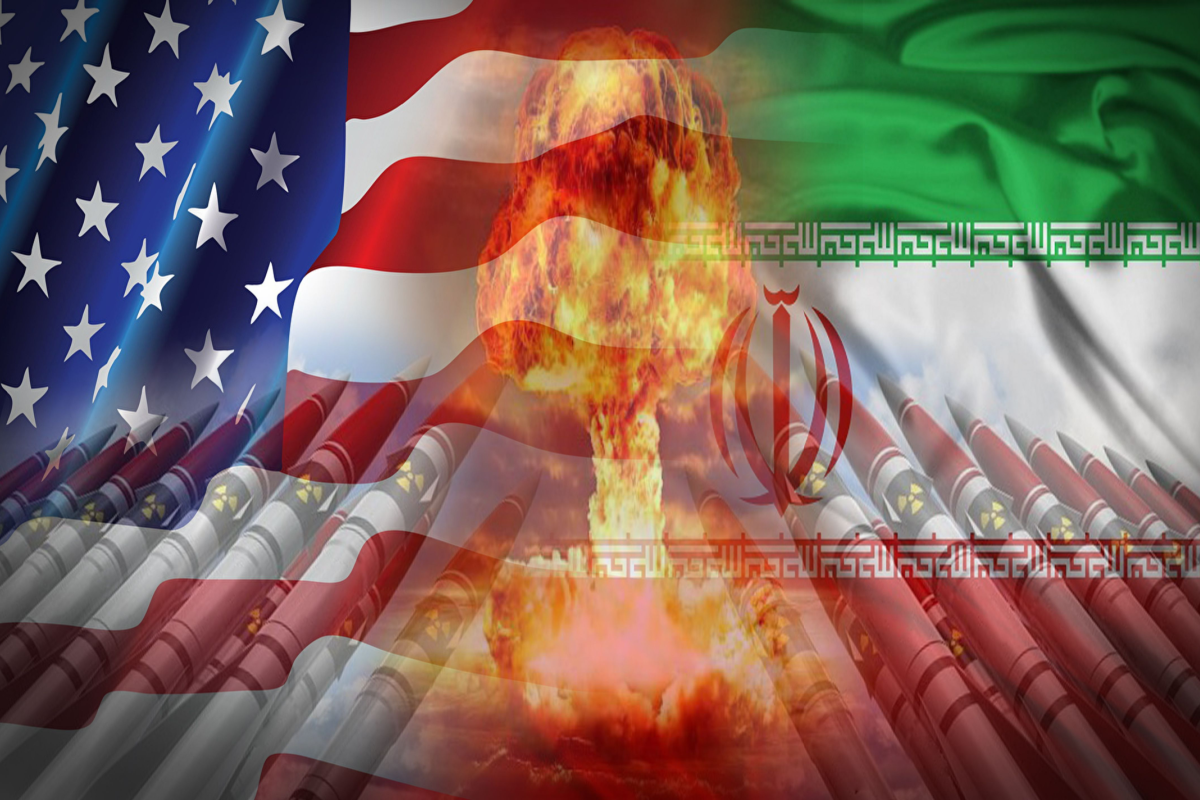
For nearly a decade, critics have argued that Donald Trump is impulsive on matters of war and peace. Supporters counter that his instincts are anchored in a single priority: preventing catastrophic threats before they mature. Nowhere is that debate sharper than in Iran. In the administration’s telling, the central issue is not abstract geopolitics. It is the claim that a regime hostile to the United States must be stopped from pairing a nuclear capability with increasingly capable ballistic missiles.
The argument rests on a familiar thesis in American security policy: deterrence fails when an adversary believes it can operate under a protective umbrella. The White House portrays Iran’s nuclear work as the ultimate shield, one that could embolden proxy warfare, intimidation of neighbors, and coercive diplomacy. From this perspective, waiting for perfect clarity is itself the risk. Trump’s supporters frame the decision to strike as the moment when Washington stopped “managing” the problem and tried to end it.
The Deal, the Limits, and the Inspection Problem
The debate over Iran’s nuclear trajectory has long turned on the 2015 Joint Comprehensive Plan of Action. Backers of the deal emphasized constraints, monitoring, and time bought for diplomacy. Opponents emphasized what the agreement did not address, especially missiles, regional militias, and sunset provisions that would relax limits over time.
Trump’s core critique has been consistent: a nuclear agreement that leaves room for expansion later is not a solution, only a delay. His 2018 decision to pull the United States out of the JCPOA was framed as a refusal to accept a future in which restrictions would gradually phase out while Iran retained knowledge, infrastructure, and leverage.
Supporters of a harder line also point to the politics of inspections. They argue that transparency is only as credible as the inspection regime, and they view any restrictions on who participates in monitoring as a vulnerability. In that framing, the United States should not be the largest contributor to international verification while also having limited direct presence on inspection teams. To them, it signals distance from enforcement, not leadership.
Missiles and the Proliferation Fear
The second pillar of the argument is that nuclear capability cannot be evaluated in isolation from delivery systems. An advanced enrichment program paired with improving long-range missiles changes the strategic equation, even if a weapon is not publicly declared. The administration’s supporters stress that ballistic missile progress shortens decision time in a crisis and raises the stakes for allies across the region.
Beyond Iran’s own arsenal, there is a third concern: technology transfer. Critics of Tehran argue Iran has a history of learning, adapting, and sharing expertise with aligned states and non-state actors. The most frequently cited example is the long-running relationship with North Korea, which has been accused for decades of trading missile know-how for funding, materials, and technical collaboration.
From this viewpoint, the danger is not only what Iran builds inside its borders, but what it enables elsewhere. The fear is a network effect: once expertise spreads and designs circulate, the world becomes less stable even if any single facility is bombed or sanctioned. That is why advocates of military action often describe the problem as persistent and regenerative, not a one-time project that can be frozen indefinitely through paperwork.
Why Supporters Say Force Was Inevitable
Trump’s supporters argue that prior approaches produced a cycle: pressure, negotiation, partial restraint, then reconstitution. They view sanctions relief and cash flows as repeatedly giving Tehran breathing room without permanently removing the underlying capability. In their telling, diplomacy failed because it did not close the pathway, it only managed it.
That logic leads to a blunt conclusion. If Iran will always rebuild, then a strategy built primarily on delay is insufficient. In that frame, force becomes the instrument that resets the timeline more dramatically, degrades infrastructure, and raises the cost of reconstitution. Supporters also argue that decisive action signals credibility to other major powers, particularly China and Russia, by showing Washington will not tolerate strategic drift on nuclear threats.
Whether that claim holds depends on outcomes that are still uncertain. Military strikes can destroy equipment, disrupt leadership, and slow programs. They can also create incentives to accelerate covert work, deepen alliances with rival powers, or destabilize the region in ways that raise long-term costs. But in this pro-strike argument, the biggest danger is allowing Iran to cross a threshold that cannot realistically be reversed without even greater conflict later.
Ultimately, Trump’s case is a wager on prevention. His allies claim he acted to protect Americans now and in the future by refusing to “kick the can.” His critics argue that prevention without a durable end state can become a trap. The political and strategic question ahead is the same one that follows every preemptive campaign: can a short-term military success translate into a long-term reduction of risk, without creating a wider and harder problem in the process.