


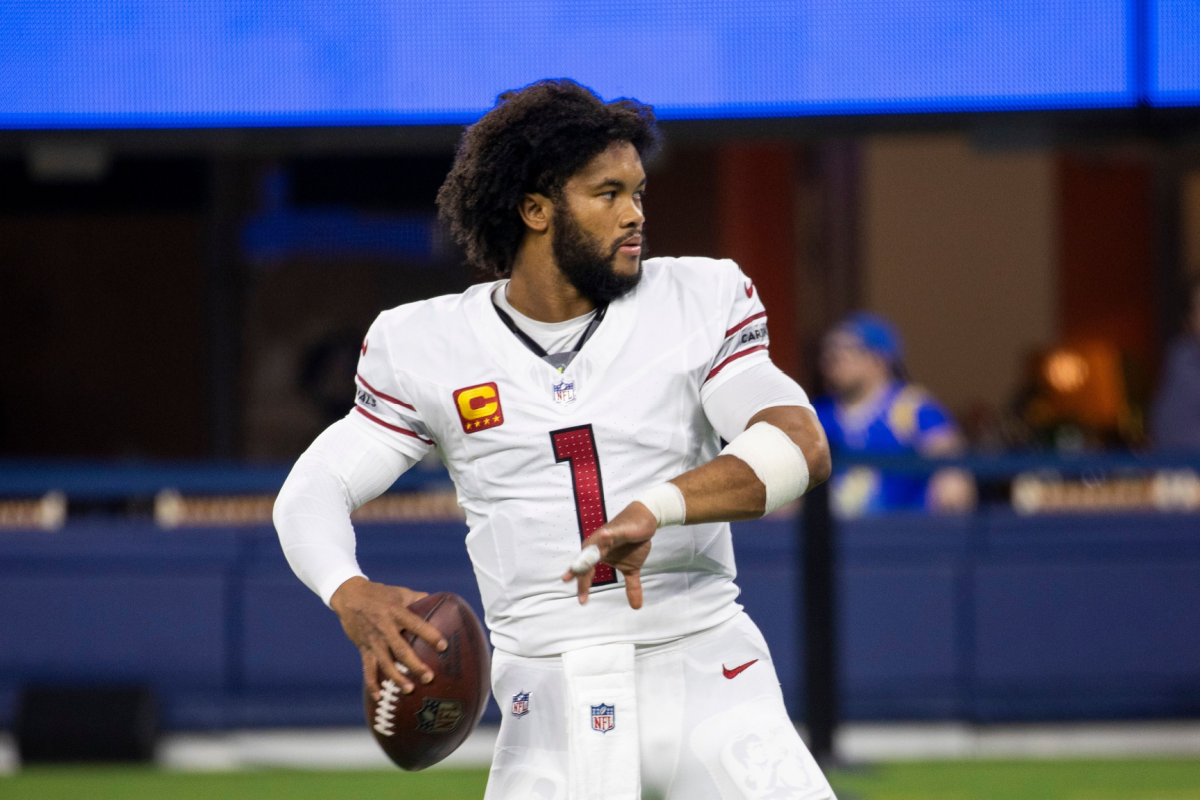
The first true shock of the 2026 NFL offseason arrived early. The Arizona Cardinals have reportedly told Kyler Murray he will be released before the new league year begins on March 11, sending a 28-year-old former No. 1 pick into unrestricted free agency. That almost never happens with a quarterback who can still start in this league.
Murray is not becoming available because the Cardinals believe he cannot play. He is becoming available because Arizona appears done paying for the week-to-week uncertainty that has defined his tenure. The move is expensive, awkward, and revealing, and it instantly reshapes how several quarterback-needy teams approach next week.
Why Arizona Walked Away Despite the Money
On paper, the release makes little sense as a pure cap play. If Arizona designates Murray as a June 1 cut, the club would save roughly $5 million, but would not access that relief until summer. A standard pre June 1 release reportedly costs the team about $2 million in 2026 cap space. Either way, the Cardinals do not gain meaningful flexibility during the key free agency window.
Arizona also loses a potential compensatory pick angle. Released players do not count in the compensatory formula. The team is also still on the hook for about $36.8 million fully guaranteed for 2026. That is a steep price to pay for separation.
The clearest explanation is availability. Murray has started a full season only three times in seven2022, he has taken roughly 1,543 dropbacks, a workload that lags far behind many peers, including older quarterbacks with major injuries in their recent history.
Arizona can live with imperfect quarterback play. It cannot build around a quarterback it cannot reliably plan for, especially when the rest of the roster is not strong enough to absorb missed time at the most important position.
Murray’s Value Is Not Top 10, But It Is Real
Murray’s recent production has been uneven. He has not looked like a consistent top tier quarterback since the peak of his early years. His efficiency and results have dipped, and he has often been forced to operate inside an offense that did not always suit him or protect him.
Still, the split between Arizona with Murray and without him tells the most useful story. Since 2022, the Cardinals are reported to be 16-25 in his starts. That is not good. But they are an even more alarming 3-24 without him. That gap matters, because it suggests he is still the difference between a flawed team being merely mediocre and being uncompetitive.
This is the tier that tends to get mispriced by public perception. Murray is not the quarterback who drags a broken roster to January. He is the quarterback who can deliver top level output when the roster is sturdy, the play caller leans into his strengths, and the team avoids constant third-and-long living.
That is why his release is so disruptive. Teams rarely get access to an above-average starter without spending premium draft capital in a trade or betting a first round pick in the draft. Free agency almost never offers this profile.
The Landing Spots That Make the Most Sense
Five teams stand out as natural fits based on roster construction, urgency, and quarterback uncertainty: the Vikings, Jets, Falcons, Steelers, and Dolphins. The Dolphins appear the least likely. Cap constraints and a front office that may prefer a cheaper developmental option make a splash signing harder to justify, even if the quarterback room remains unsettled.
The Jets can afford almost anyone. The real question is whether a quarterback in Murray’s position wants to attach his next chapter to a franchise that has struggled to stabilize offensive identity and quarterback development. A short deal with strong incentives could work, but the risk calculus cuts both ways.
Atlanta is the most intriguing blend of roster readiness and opportunity. The Falcons have talent at the skill positions and play in a division that can be won with competent quarterback play. The fit gets complicated if the scheme asks Murray to live in areas of the field he historically avoids. That concern is real, because his comfort zones are obvious on film.
Minnesota is the glamorous option because of the weapons. Pairing Murray with Justin Jefferson and Jordan Addison would generate instant excitement. The obstacle is philosophical. The Vikings’ ideal passing game leans on timing throws inside the numbers and intermediate work over the middle. Murray has not consistently made that his home. A coach can adapt, but a coach also has to want to.
Pittsburgh may be the cleanest schematic marriage. The offense can live in shotgun, emphasize quick game, and push the ball outside the numbers, all areas where Murray is comfortable. The Steelers also have enough cap room to act, and a franchise that expects to compete every year will not want a multi-year pause at quarterback.
What Happens Next for the Market
Murray’s release forces teams to answer a hard question fast. Do they want an expensive but real starter, or do they want to spend March building the roster and chase a quarterback later? The scarcity of credible starters suggests Murray will have multiple suitors, even if his next contract is structured to protect a team from missed time.
For Murray, the stakes are simple. He is still young, but his edge is tied to athleticism, and that advantage is not permanent. The next team will not be buying a mystery. It will be buying a volatile but valuable starter, one who can win in the right environment, and one who will be under pressure to prove he can stay on the field long enough for that environment to matter.