


From Confident Accusation to Public Uncertainty
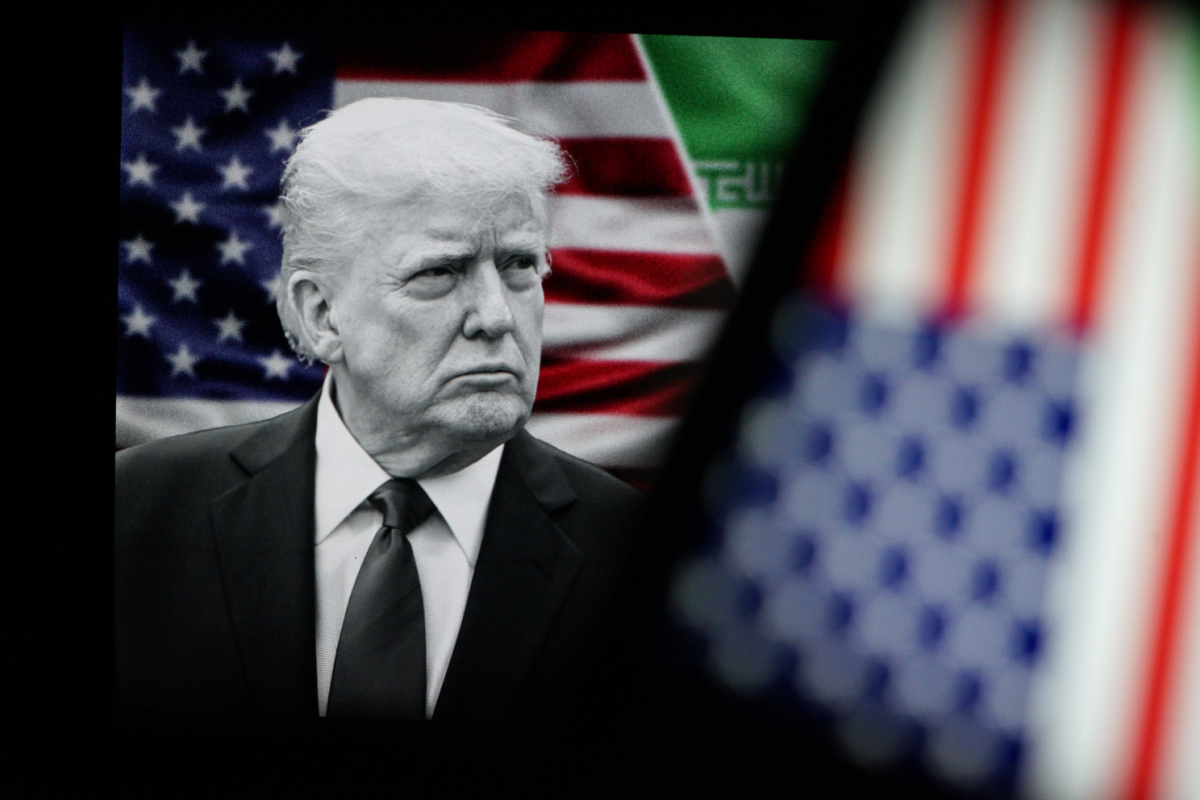
President Donald Trump faced renewed scrutiny this week after reversing a major claim about a strike that killed children early in the war involving the United States, Israel, and Iran. On Saturday, Trump asserted that Tehran struck an Iranian elementary school, killing scores of children. By Monday, he acknowledged he did not have firm knowledge of what happened and said he would defer to an investigation.
Asked why others in his administration were not echoing his initial accusation and were instead pointing to an inquiry, Trump replied: “Because I just don’t know enough about it.” He added that he would respect the investigation’s conclusions.
The episode drew attention because the school strike had already become a major international story when Trump weighed in. It also became politically sensitive in Washington, with some Republicans reportedly concerned the incident could damage support for the war effort if US forces were found responsible.
Weapons Claims Raise Additional Questions
During the same exchange, Trump suggested other countries, including Iran, use Tomahawk missiles. Tomahawks are a US-made cruise missile system and Iran does not have Tomahawks. The remark intensified criticism that the president appeared to be speaking without clear grounding on key details of the conflict.
Separately, reporting and analysis cited by critics has pointed to evidence that a US missile likely hit near an Islamic Revolutionary Guard Corps naval facility adjacent to the school. The Iranian government has denied that Iranian operatives were responsible for the school strike, and Trump has said he will wait for the investigation’s findings.
For critics, the central concern is not only that Trump’s initial claim may have been wrong, but also that he publicly acknowledged limited knowledge while commenting on one of the most controversial incidents of the war.
Gulf Allies and the Question of Who Has Joined the Fight
Trump also made comments that appeared to suggest Iran’s Gulf neighbors had joined the war effort alongside the United States and Israel. He described neighbors as initially neutral before being attacked, then said they came “onto our side” and began attacking Iran, citing Saudi Arabia, the United Arab Emirates, and Qatar.
Public statements from those governments have not matched that description. The UAE has faced Iranian strikes on US-linked assets and regional infrastructure, but it has not announced attacks on Iran. Saudi Arabia has signaled it could respond if Iranian strikes continued, but it has not declared entry into the war. Qatar has explicitly said it is not part of a campaign targeting Iran, while its leadership has emphasized de-escalation.
The gap between Trump’s remarks and the public positions of these states became more visible as some Republicans criticized the Gulf for not joining the fight. Sen. Lindsey Graham publicly argued that attacks affecting Riyadh should create an obligation to participate, and he described the UAE stance as disappointing.
Oil, the Strait of Hormuz, and Global Spillovers
Another theme in Trump’s comments was the economic impact of disruptions near the Strait of Hormuz. He suggested the slowdown there “doesn’t really affect us,” arguing that the United States produces large amounts of oil domestically.
Energy analysts frequently note that oil is traded in a global market, meaning supply shocks in one region can influence prices elsewhere. Even if the US produces significant crude, US consumers and businesses can still feel the effects of global price swings, particularly through gasoline costs and inflation expectations.
Critics argue that minimizing these linkages risks understating the domestic economic consequences of a conflict that is already influencing global shipping risk, insurance premiums, and energy pricing.
Broader Debate Over Threat Claims and War Rationale
The dispute over the school strike came amid wider debate about Trump’s portrayal of Iran’s capabilities and intentions. Trump has argued that Iran was close to being able to strike the United States with long-range missiles and has framed the war as necessary to prevent escalating threats.
However, critics say several of the most expansive claims have not been supported by publicly known intelligence. They also note that Trump has sometimes described Iranian plans in terms that are not consistently reflected in the messaging of other senior officials.
For supporters, Trump’s posture reflects deterrence and urgency. For opponents, the concern is that inconsistent descriptions of events, allies’ roles, and economic consequences create confusion during a fast-moving conflict in a volatile region.