

Anthony Leggett, Nobel physicist, dies at a moment when his work still stands near the center of condensed-matter physics. Sir Anthony James Leggett, who won the 2003 Nobel Prize in Physics for pioneering work on superconductors and superfluids, died on March 8, 2026, at age 87. The University of Illinois Urbana-Champaign, where he spent much of his career, announced his death this week.
Leggett built his reputation by explaining the strange behavior of matter at extremely low temperatures. The Nobel committee honored him for “pioneering contributions to the theory of superconductors and superfluids,” work that helped physicists understand how quantum effects can shape materials on a visible, macroscopic scale.
His name became especially tied to the theory of superfluid helium-3, a form of matter that flows without viscosity under extreme conditions. That research helped open a broader scientific path into quantum behavior in complex systems, and it cemented Leggett’s place as one of the leading theorists of his era.
A Career That Moved From Britain to Illinois
Leggett was born in London on March 26, 1938, and studied at Oxford, where he first trained in classics before moving into physics. He later built his academic career through posts in Britain, Japan, and North America before joining the University of Illinois in the early 1980s.
In Illinois, he became one of the university’s most prominent scientists and remained a major figure there for decades. The university described him as a world leader in condensed-matter physics and in the study of macroscopic quantum systems, a field that asks how the rules of quantum mechanics extend beyond atoms and particles into larger-scale phenomena.
His research interests widened over time. After his landmark work on superfluid helium, he also contributed to studies of quantum dissipation, glasses, high-temperature superconductivity, Bose-Einstein condensates, and tests of the foundations of quantum mechanics.
Beyond Superfluids, He Challenged Quantum Theory Itself
Leggett did not limit himself to one corner of physics. He also helped shape debates over whether quantum mechanics continues to hold true as systems move from the atomic scale to the everyday world. That made him unusual even among top theorists: he moved between highly technical condensed-matter research and some of the deepest conceptual questions in physics.
Colleagues remembered him not just for his technical brilliance, but also for his influence across generations of researchers. Oxford physicist Stephen Blundell called him a world leader in condensed-matter physics and highlighted both his scientific breadth and his long association with Oxford. Other tributes from research institutions described him as one of the defining physicists of the last half-century.
That broader legacy helps explain why Anthony Leggett Nobel physicist dies is more than an obituary headline for specialists. His work helped scientists connect abstract quantum theory to real materials and measurable phenomena, giving later researchers a framework they still use in laboratories today.
A Lasting Figure in Theoretical Physics
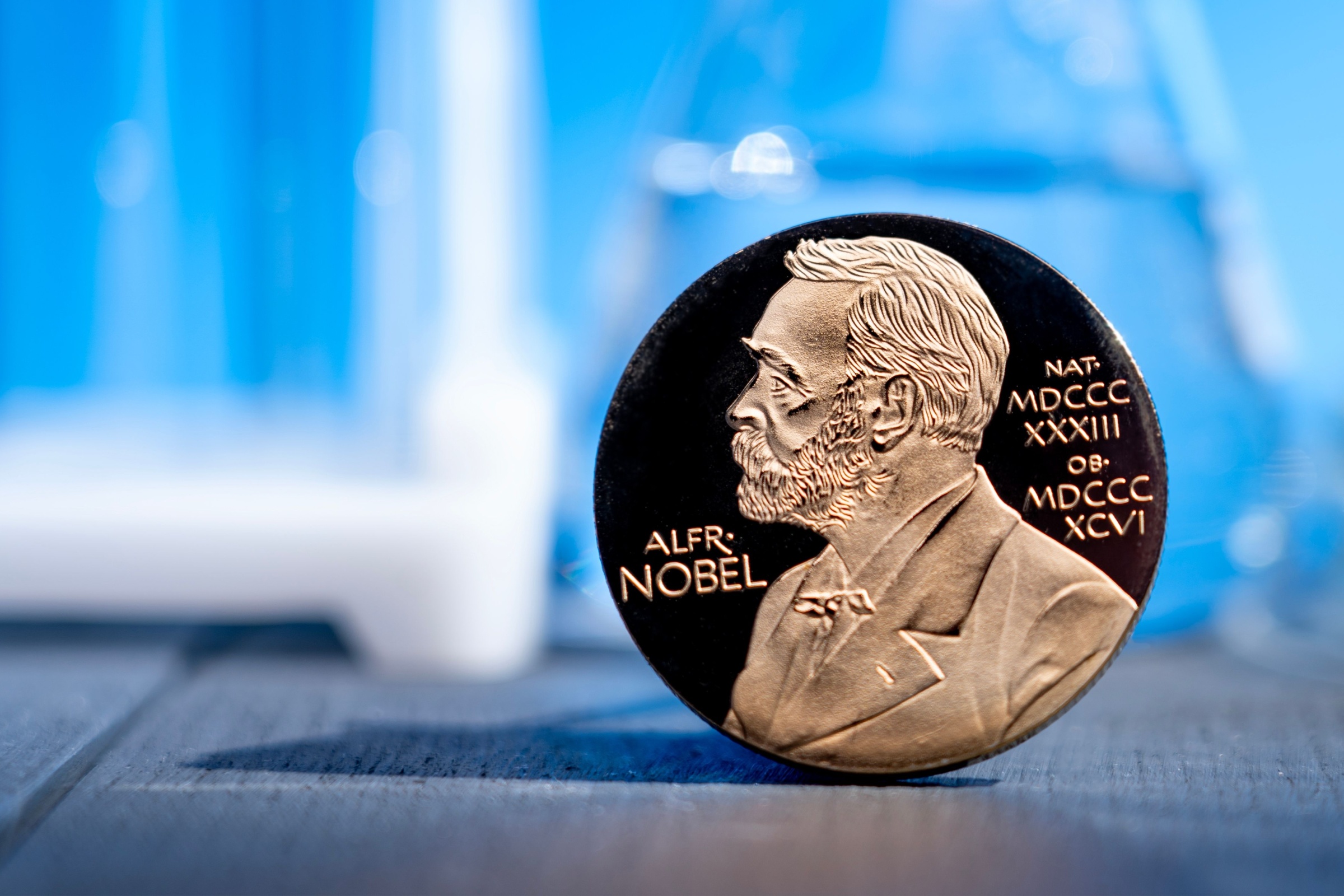
Leggett shared the 2003 Nobel Prize with Alexei Abrikosov and Vitaly Ginzburg, and he later received other major honors, including the Wolf Prize in Physics. Over time, his standing extended beyond prize lists. He became a touchstone for entire areas of low-temperature and theoretical physics.
The University of Illinois announcement stressed the reach of his work in both condensed matter and quantum foundations. That combination made Leggett distinctive. Many physicists transform one field; fewer leave a mark on both a technical specialty and the discipline’s philosophical core.
With the death of Anthony Leggett Nobel physicist, science loses one of the theorists who helped define how researchers think about collective quantum behavior. His work on superfluidity, quantum mechanics, and the behavior of matter at the coldest extremes remains a foundation of modern physics.