


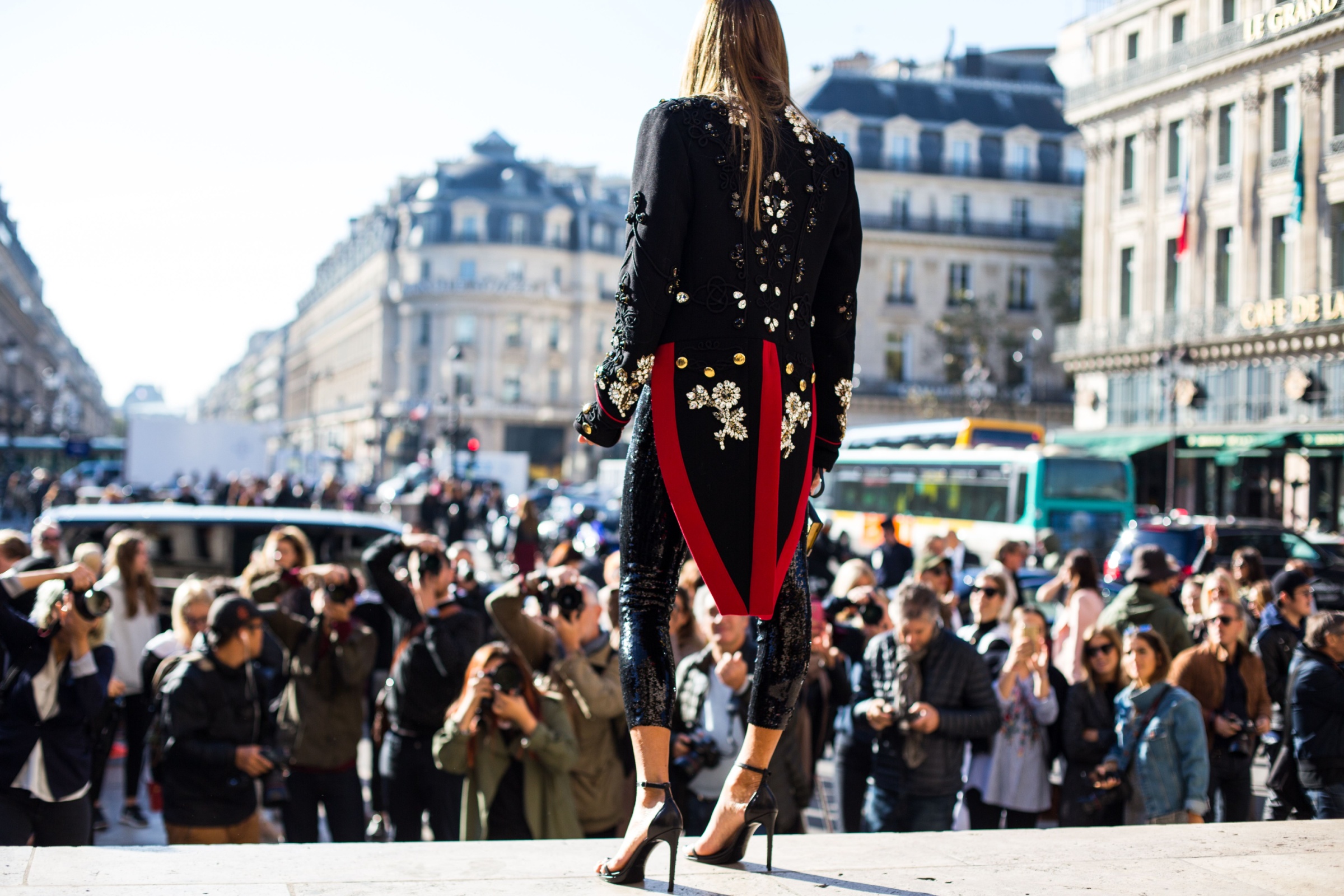
Paris Fashion Week prettiness became a central theme during the Fall/Winter 2026 shows. That mood arrived against a darker global backdrop. War, inequality, and general anxiety shaped the atmosphere beyond the runways. Even so, designers largely responded with softness, pleasure, and visual escape.
The week suggested that escapism remains one of fashion’s most reliable functions. Designers usually work months ahead of their shows. Therefore, they have little room to react to sudden world events. Instead, many seemed to treat distraction itself as part of the job.
Dior Made Prettiness Feel Expansive
Dior offered one of the clearest arguments for why escapist fashion still matters. Jonathan Anderson staged his second women’s ready-to-wear show outdoors above a pond of artificial lily pads. The setting framed the collection as dreamlike from the start. Moreover, the clothes matched that mood with strong confidence.
Soft bar jackets, scalloped layers, feather-trimmed dresses, and candy-like shoes defined the collection. The show appealed to very different audiences. Wealthy shoppers, online viewers, and hardened fashion insiders all appeared to respond. That broad reaction gave Dior one of the week’s strongest consensus moments.
Anderson’s earlier Dior work had sometimes seemed too restrained. This collection felt more emotionally charged and more complete. It suggested that prettiness does not need to mean empty bows or obvious florals. Instead, Dior treated it as something materially rich and technically ambitious.
Chanel Turned A Classic House Code Toward Shine
Paris Fashion Week prettiness also found a major expression at Chanel. Before the Monday show, the house was already drawing attention online. Social posts showed eager shoppers unpacking purchases from Rue Cambon. That buzz helped underline the brand’s current commercial pull.
Matthieu Blazy’s latest Chanel show pushed that energy further. The classic Chanel skirt suit returned, but in a more sparkling form. Pastel sequins, layered styling, and softened structure gave the house code a lighter touch. As a result, the traditional Chanel look felt less severe and more inviting.
The collection suggested that bourgeois polish need not feel stiff. Tweed jackets were relaxed or replaced with overshirts. Trucker-style elements also shifted the mood. Chanel’s familiar sobriety remained present, but it was recast through shimmer, ease, and a more playful attitude.
Dries, Chloé, And Comme des Garçons Offered Different Answers
Pretty can look effortless, but the week showed how difficult it is to do well. Dries Van Noten presented autumnal shades, happy reds, and dense florals with unusual control. The collection looked easy on the surface. However, its calm effect seemed rooted in strong discipline.
That mattered because Julian Klausner has only been in the top role for a short time. His adaptation looked smooth and precise. While many brands continue cycling through creative upheaval, Dries Van Noten seemed stable. In that context, delight itself began to look like an achievement.
Not every version of prettiness worked equally well. Chloé pushed large plaid dresses and skirts with obvious folk references. That fantasy felt too literal and too sweet. Rather than transporting viewers, it risked feeling impractical and overly quoted.
Comme des Garçons offered a stranger and more open-ended take. Rei Kawakubo showed sculptural black forms and paired them with a note about black as an ending point. Then came a burst of pink dresses in the middle. That interruption felt like hope, diversion, or a brief emotional release.
Celine Brought Pragmatism While Balenciaga Stumbled
Paris Fashion Week prettiness was not the only idea on display. Some brands paired attractiveness with practical purpose. Celine stood out for doing this especially well. Its show presented sharp, stylish outfits that seemed built to brighten everyday life.
There were pretty moments within the collection, including near-monochrome looks in pink, cream, and brown. Still, the larger message was fresh pragmatism. Designer Michael Rider appeared focused on wearable clothes rather than personal display. That emphasis made the collection feel lively, useful, and modern.
Backstage, Rider described the ideal in simple terms. He spoke about controlling fabric and letting the person come through. The goal, he suggested, was movement rather than swaddling. That outlook gave Celine one of the week’s clearest positions.
Balenciaga, by contrast, came off far less convincingly in this landscape. The collaboration with “Euphoria” aimed at younger attention, but the result felt out of step. Oversized sneakers, faux couture gestures, and generic sportswear created an uneven mix. Against the week’s stronger shows, the emotional effect felt muddled and unattractive.