


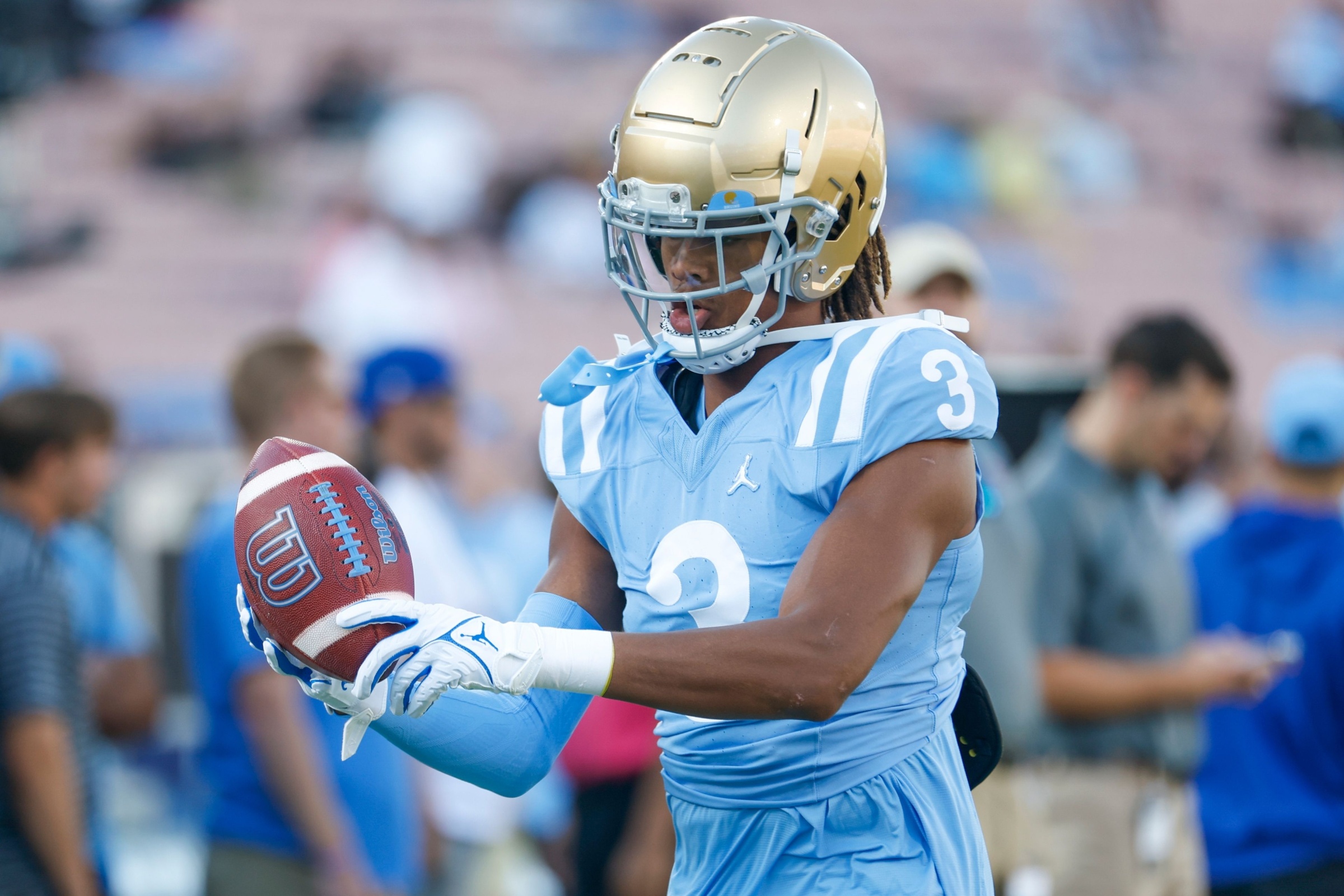
Athlete mental health support moved to the center of the conversation this week after Oregon quarterback Dante Moore publicly described his struggles with depression. In a letter to Oregon Gov. Tina Kotek, Moore said he faced serious emotional strain early in his college career as he tried to manage the pressure of playing quarterback at a high level.
Moore told The Oregonian/OregonLive, as cited by ESPN, that he wrote the letter on March 3 and shared it publicly in a story published on March 16, 2026. He said the pressure and expectations surrounding major college football felt overwhelming when he was 18.
He also described a second source of pain during that period. Around the same time, his mother, Jera Bohlen-Moore, received a breast cancer diagnosis. Moore wrote that watching her go through chemotherapy while he tried to stay focused on school and football challenged him “mentally and emotionally.”
That combination of athletic pressure and family crisis gives the story a wider health meaning. It shows how mental distress in athletes does not emerge only from competition. It can also build through overlapping personal, academic, and family stressors. This is an inference drawn from Moore’s account of multiple pressures occurring together.
A Personal Story Turns Into a Public Appeal
Moore did not frame his experience as a private issue alone. In the letter, he asked Kotek to support and protect virtual mental health services in Oregon, saying those resources helped him recover. He wrote that support from friends and family, and access to care, made the difference in his own life.
His comments also focused on a barrier that often appears in public health research and athlete testimony: the difficulty of asking for help. Moore wrote that, as a young Black man and athlete, reaching out for care could feel like “climbing an uphill battle.” He described help-seeking as an act that required vulnerability and trust.
That point matters because athletes often operate inside cultures that reward toughness, control, and silence under pressure. Quarterbacks, in particular, are expected to project steadiness and leadership at all times. Moore directly addressed that expectation in his letter, writing that he is expected to lead, stay composed, and carry responsibility for his team.
By speaking publicly, he shifted the focus from performance to care. He also linked mental health treatment to leadership rather than weakness. Moore wrote that learning to care for his own mental health made him a better leader, teammate, and student.
Why the Story Resonates Beyond Football
The most important health angle in Moore’s account is not the transfer history or the football spotlight. It is the way he describes depression as something that affected him both on and off the field. That phrasing reflects a broader reality in mental health: emotional strain rarely stays confined to one part of life.
His story may also resonate because it challenges a familiar sports narrative. Public discussion around elite athletes often centers on resilience, competition, and future potential. Moore’s letter instead highlights recovery through connection, treatment, and honest self-disclosure. That makes the story less about crisis alone and more about what effective athlete mental health support can look like in practice. This is an interpretation grounded in the themes of his letter.
Moore’s mother was declared cancer-free in the summer of 2024, according to ESPN’s report. The article also noted that he has continued to support cancer awareness since transferring to Oregon. That detail adds context to why his message now carries both personal and public weight.
The Broader Mental Health Message
Moore said he recently challenged his teammates to use their platform to support people who feel voiceless. That language suggests he sees mental health advocacy as part of leadership, not as a separate cause outside sports.
For the health section, that may be the clearest takeaway. Moore’s story is not only about one player describing depression. It is about how public figures can simultaneously normalize care, reduce stigma, and advocate for better access. His emphasis on virtual services is especially notable because remote care can lower barriers for people who might not otherwise seek treatment. That last point is a general public health inference, while Moore’s request for virtual service support is directly reported.
He ended the letter with a simple message about survival and support. Moore wrote that he knows what it feels like to struggle in silence, and he also knows what it feels like to be supported and come back stronger. He added that support “saved” him. In a sports culture that often praises endurance more than openness, that may be the most consequential statement of all.