


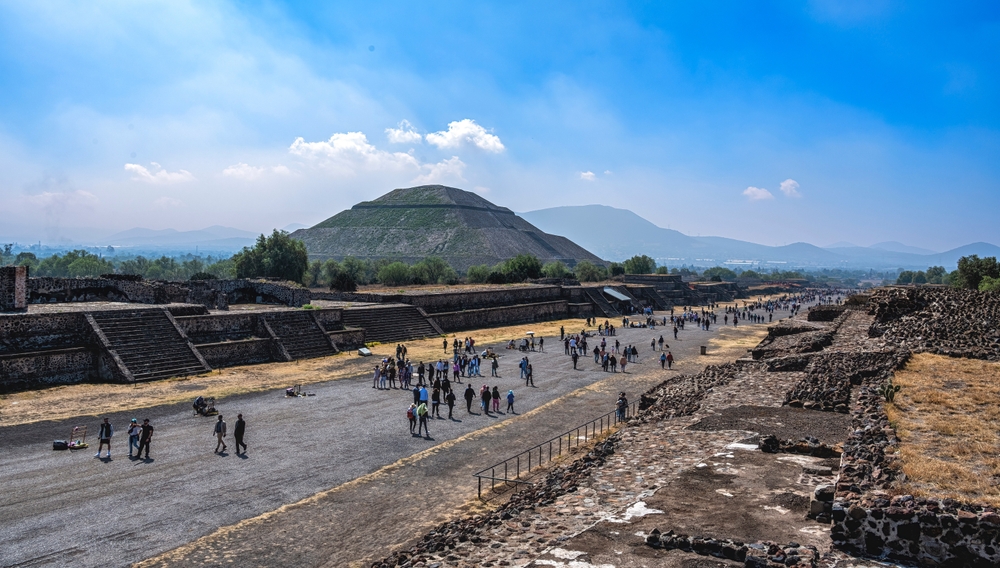
A deadly shooting at the Teotihuacán pyramids has shaken one of Mexico’s most important tourist landmarks and reopened uncomfortable questions about security at globally recognized cultural sites. What should have been an ordinary day at one of the country’s best-known archaeological complexes instead turned into a scene of panic, death and confusion when a gunman opened fire from high on one of the pyramids.
The attack left a Canadian tourist dead and more than a dozen other people injured, some by gunfire and others while trying to escape. The assailant later died from a self-inflicted gunshot wound, according to authorities. The episode stunned visitors and quickly became an international story because of where it happened: a UNESCO-recognized site visited by huge numbers of tourists every year.
The violence is all the more jarring because Teotihuacán is not just another public space. It is one of the most symbolic and heavily visited historical destinations in Mexico, a place associated with heritage, tourism and national identity rather than mass-casualty violence.
A Tourist Landmark Became A Scene Of Panic
The attack unfolded at one of the most recognizable areas of the complex, where visitors suddenly found themselves scrambling for cover on and around the Pyramid of the Moon. Witness images and videos captured the chaos as people crouched near the lower levels, rushed down steep steps or tried to move away from open sightlines.
That kind of panic can be dangerous even without direct gunfire, and the injury toll reflected exactly that. Not everyone hurt was struck by bullets. Some were injured in the desperate attempt to escape from an exposed and crowded historic structure not designed for rapid evacuation during an armed attack.
This is what made the event especially frightening. The combination of height, stone steps, crowd movement and confusion turned the site itself into part of the danger.
The Victims Came From Several Countries
The international profile of the victims underlines how global a destination Teotihuacán has become. Authorities said those injured included foreign tourists from multiple countries, among them visitors from the United States, Colombia, Brazil, Russia and Canada. That reflects the site’s role not only as a Mexican landmark but as a major international attraction.
The death of a Canadian woman and the wounding of foreign tourists from several nations ensure that the consequences will reach beyond Mexico’s domestic security debate. Incidents like this quickly become diplomatic and reputational concerns as embassies, foreign ministries and international media begin asking how such an attack could happen at a site of this importance.
For Mexico, that matters because tourism is not only symbolic. It is also economically vital, and confidence in safety remains central to that industry.
The Attack Raises Questions About Site Security
One of the most immediate issues after the shooting is how an armed man managed to carry a gun, ammunition and a knife into such a high-profile archaeological zone. That question is likely to dominate the investigation because the scale of the breach suggests a serious failure in screening or preventive security.
Historic sites are difficult to secure perfectly, especially when they are large, open and designed for public access. But the fact that the gunman was able to position himself at elevation and fire on visitors from there will intensify scrutiny on surveillance, entrance controls and emergency response procedures.
The incident may therefore force a broader reassessment of how Mexico protects not only Teotihuacán, but other major cultural and tourist sites as well.
The Symbolic Damage Is Significant
Beyond the immediate human tragedy, the location of the attack gives it an especially heavy symbolic impact. Teotihuacán is one of the most visited archaeological zones in the country and one of the best-known in the Americas. Violence there strikes at a place meant to represent history, continuity and shared cultural inheritance.
That is why such incidents resonate more widely than violence in an ordinary setting. They alter how people imagine a landmark. A place associated with ancient civilization and tourism suddenly becomes associated with fear, security failures and vulnerability.
Even if the site reopens relatively soon, the memory of the attack will not disappear quickly. It may affect how future visitors, tour operators and foreign governments assess the risks of travel there.
The Timing Adds More Pressure On Mexico
The shooting also comes at a sensitive moment for the country. Mexico has been trying to project readiness and stability as it prepares to co-host this summer’s World Cup, and officials have repeatedly emphasized that security planning is in place for major events and destinations.
An attack of this scale at one of the country’s most famous tourist sites is therefore deeply uncomfortable for the government. It cuts directly against that message of control and preparedness. Even if authorities move quickly and visibly in response, the event inevitably raises doubts about whether security vulnerabilities are wider than officials have suggested.
That does not mean the incident defines the entire country. But it does mean the pressure on the government to reassure both domestic and foreign audiences will increase sharply.
The Investigation Now Matters As Much As The Response
In the immediate aftermath, officials focused on treating the wounded, securing the area and restoring calm. But the longer-term importance of the story will depend on what investigators uncover about the attacker, his motive and the security failures that made the attack possible.
There have already been reports about disturbing material allegedly linked to the gunman, but the key issue for authorities is whether they can move beyond speculation and provide a clear, credible account of what happened. That will shape public confidence far more than early rumor or social media theory.
For now, the attack stands as both a human tragedy and a warning. Teotihuacán remains one of Mexico’s great cultural sites, but the shooting has shown that even places built to preserve the past are not immune from the violence of the present.