


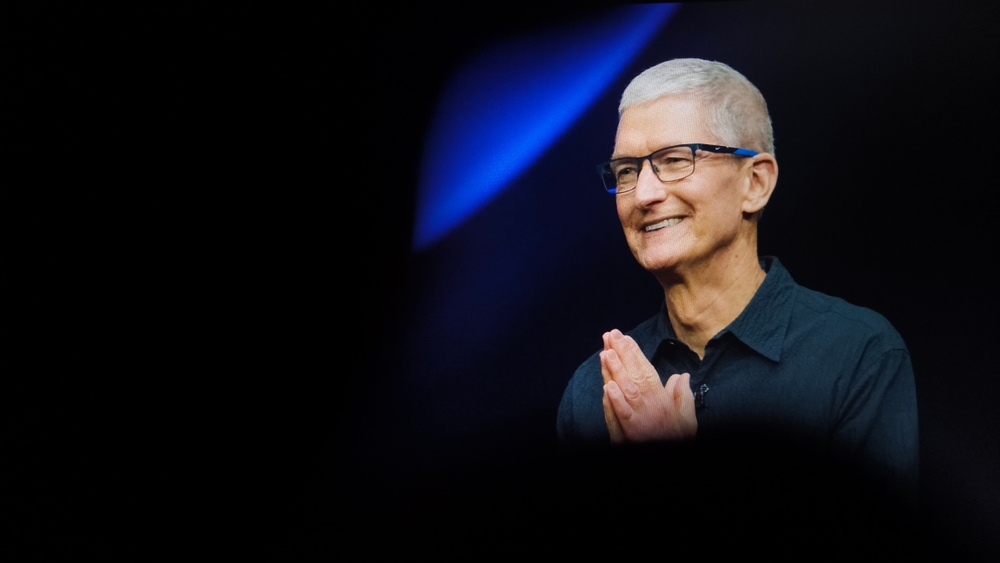
Apple has chosen continuity over surprise in naming its next chief executive. The company announced that Tim Cook will step down as CEO in September and that longtime hardware leader John Ternus will take over, extending a tradition that has long defined Apple’s approach to leadership: promote from within, protect the culture and hand the company to someone already deeply embedded in its product DNA.
The decision had been widely anticipated inside the industry. Ternus, who has spent more than two decades at Apple and has become one of the company’s most visible product leaders, was often seen as the most likely successor to Cook. His elevation signals that Apple wants its next phase to remain anchored in hardware discipline, engineering execution and the product-first mentality that has defined the company for years.
But Ternus is not inheriting a company in a comfortable moment of pure stability. Apple remains enormously profitable and influential, yet it is also facing rising pressure in one of the most important areas in technology today: artificial intelligence.
A Successor Shaped Inside Apple
Ternus’s appointment is consistent with how Apple likes to operate. The company rarely looks outside for top leadership when it believes its internal bench is strong enough to preserve strategic direction and institutional identity. That is exactly what this move suggests.
Ternus joined Apple in 2001 and steadily rose through the hardware engineering ranks, eventually taking responsibility for some of the company’s most important product lines. Over the years, he has played a central role in the development of the iPhone, iPad, AirPods and Mac hardware strategy, while also helping guide Apple through the transition toward its own silicon.
That background matters because Apple still sees product development, not just financial engineering or platform management, as the heart of the company. Promoting Ternus reinforces the idea that Apple wants engineering leadership at the center of its next chapter.
The Product Culture Is Staying Intact
The market will read this appointment as a sign of continuity. Ternus is not a radical outsider brought in to disrupt Apple from the top down. He is a company veteran shaped by the same internal systems that produced many of Apple’s most successful devices over the past two decades.
That makes the move reassuring in one sense. Investors and employees know what kind of operator he is. He understands the product cadence, the internal standards and the importance Apple places on precision, secrecy and long-term execution. There is little risk of a sudden cultural rupture.
At the same time, continuity can only take a company so far. Ternus will not be judged simply on whether he preserves Apple’s traditional strengths. He will also be judged on whether he can push the company more convincingly into the next great technology cycle.
Artificial Intelligence Will Define The Early Test
The biggest strategic challenge waiting for Ternus is Apple’s uneven AI position. For all its strength in devices, software integration and ecosystem control, Apple has increasingly been viewed as moving more slowly than some of its largest rivals in turning AI into a visible consumer advantage.
That perception has become harder to ignore as competitors race to embed generative AI more aggressively into products and services. Apple has faced development setbacks around its own AI-powered Siri ambitions and has had to rely more visibly on outside support than many observers once expected.
This does not mean Apple is out of the race. The company still has enormous advantages, including control over hardware, software and custom chips. But Ternus will need to show that those advantages can be translated into a more compelling AI story, one that feels proactive rather than delayed.
His Career Suggests A Builder, Not A Showman
Ternus’s career inside Apple suggests a leader shaped more by engineering rigor than by public spectacle. He is well known to Apple watchers because of his appearances at product launch events, but his rise has come through technical leadership and operational trust rather than personality-driven prominence.
That profile may suit Apple well. The company does not necessarily need a flashy public figure at the top. It needs someone who can preserve the discipline of its product machine while also steering it through a moment when hardware alone no longer guarantees leadership.
His background also reflects one of Apple’s enduring strengths: the ability to turn engineers into senior executives who understand both the details of building products and the broader strategic meaning of those products in the market.
Cook Leaves Behind A Very Different Apple
When Tim Cook took over from Steve Jobs, he inherited a company still defined in the public imagination by its founder. Over time, he reshaped Apple into something larger, steadier and even more financially powerful, expanding its services business, deepening the ecosystem and turning it into one of the world’s most valuable companies.
That legacy will shape how Ternus is judged. He is not stepping into a turnaround. He is stepping into a mature giant that must now prove it can still lead in a new era of computing. That is a very different challenge from the one Cook faced, but no less significant.
Cook will remain as executive chairman, which should help preserve stability during the transition. But once Ternus takes the top job, the expectations will quickly become his own.
The Real Question Is What Apple Becomes Next
The appointment of John Ternus says a great deal about what Apple values: engineering depth, internal trust and leadership continuity. But the more important question is what kind of Apple he will now have to build.
If he succeeds, he will show that Apple can remain a product-led company while still becoming much more forceful in AI. If he struggles, critics will say the company leaned too heavily on continuity at a moment that required bolder reinvention.
That is why this transition matters so much. Apple has not chosen a dramatic outsider to reinvent itself. It has chosen one of its own to prove that reinvention can still come from within.