


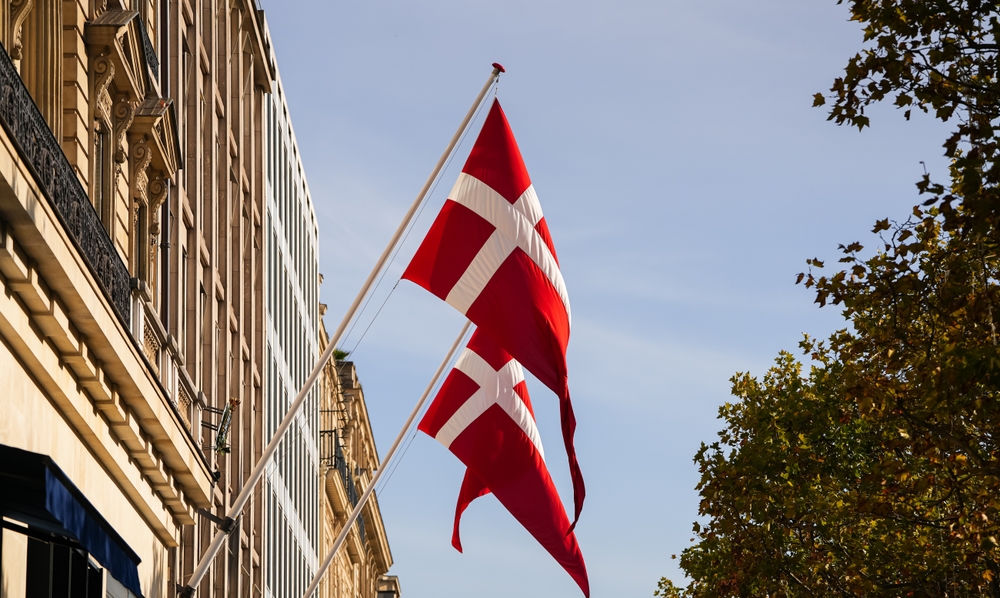
Report says Copenhagen feared possible US military action
Denmark reportedly took extraordinary contingency measures in January after Donald Trump renewed threats to seize Greenland by force, revealing how seriously Copenhagen viewed the possibility of a rupture with its closest security ally. According to a report by Danish public broadcaster DR, Danish authorities flew blood supplies to Greenland and sent explosives that could be used to destroy runways if a military confrontation with the United States ever became imminent.
The account offers one of the clearest indications yet of how deeply Trump’s rhetoric unsettled Denmark and parts of Europe at the start of the year. Greenland, while largely self-governing, remains part of the Danish commonwealth, and any US move against the territory would have amounted to a direct challenge not only to Danish sovereignty but also to the foundations of NATO itself. That is why what might once have sounded implausible was reportedly treated in Copenhagen as a scenario serious enough to justify military planning.
The reported preparations came during a period when Trump said the United States needed Greenland very badly and suggested Washington could take it the hard way. Those remarks were widely dismissed in some quarters as political theater, but the new details suggest Danish officials were unwilling to assume the threat was empty.
Military planning reportedly focused on delaying a landing
According to the report, Danish soldiers flown to Greenland carried explosives intended for runways in Nuuk and Kangerlussuaq. The purpose, if the claims are correct, was not to prepare for open war in a conventional sense, but to deny access to aircraft in the event of an attempted US landing. That kind of planning points to a strategy of delay and deterrence rather than any expectation that Denmark could defeat the United States militarily.
The same deployments reportedly included blood bags from Danish blood banks to treat the wounded if fighting broke out. That detail is especially striking because it suggests the preparations were not merely symbolic or administrative. They were based on the assumption that an armed clash, however unthinkable in NATO terms, had become necessary to contemplate.
Such measures would have represented an extraordinary reversal in European security logic. Denmark and the United States have for decades operated as close military partners, including in the Arctic, where Washington already maintains a strategic presence at Pituffik Space Base. To prepare for the possibility of conflict with that same ally would have marked a break with assumptions that have defined transatlantic defense since the second world war.
European backing reportedly moved faster after January shock
The broader response described by DR suggests the Greenland crisis did not remain a purely Danish matter. The report says Copenhagen had already started seeking political support from European capitals in secret talks soon after the 2024 US election, but that those efforts accelerated sharply after the January confrontation. In that telling, the turning point came when the United States launched its operation in Venezuela and Trump renewed his demands on Greenland almost immediately afterward.
From that moment, the question facing Denmark was no longer just diplomatic. It became strategic. If Washington was willing to use force elsewhere and openly threaten a NATO ally over Greenland, then Europe had to consider what practical support might be needed if deterrence failed. DR says an advance command involving Danish, French, German, Norwegian and Swedish personnel was sent to Greenland, followed by a larger force that included elite troops. Danish fighter aircraft and a French naval vessel were also reportedly moved toward the North Atlantic.
The apparent logic was to place multiple European nationalities on the ground so that any US military move would immediately become a hostile act against several allied states, not just Denmark. That would have raised the political cost of any operation and underscored that Greenland was no longer only a bilateral dispute between Copenhagen and Washington.
Silence from governments leaves questions unanswered
Neither the Danish Ministry of Defence nor the offices of Danish Prime Minister Mette Frederiksen and Greenlandic Prime Minister Jens-Frederik Nielsen commented on the report. That silence is not surprising. Confirming such planning would publicly acknowledge that one NATO member considered another a potential invader, something with profound diplomatic consequences even months after the immediate crisis eased.
Still, the significance of the episode extends beyond whether every operational detail can be independently verified. What matters is the broader picture it paints of Europe’s changing view of its own security. One senior French source quoted in the report said the Greenland episode convinced Europe once and for all that it must be able to look after its own defense. That conclusion fits a wider trend already visible across the continent, where governments are increasingly preparing for a world in which American guarantees are no longer automatic or reliable.
If the account is accurate, the Greenland scare was not only a moment of Danish alarm. It was a strategic shock for Europe as a whole. It suggested that the old assumption that conflict within the Atlantic alliance was unthinkable could no longer be treated as absolute. In that sense, the episode may be remembered less for what happened on the island itself than for what it revealed about the fragility of the security order Europe once took for granted.