


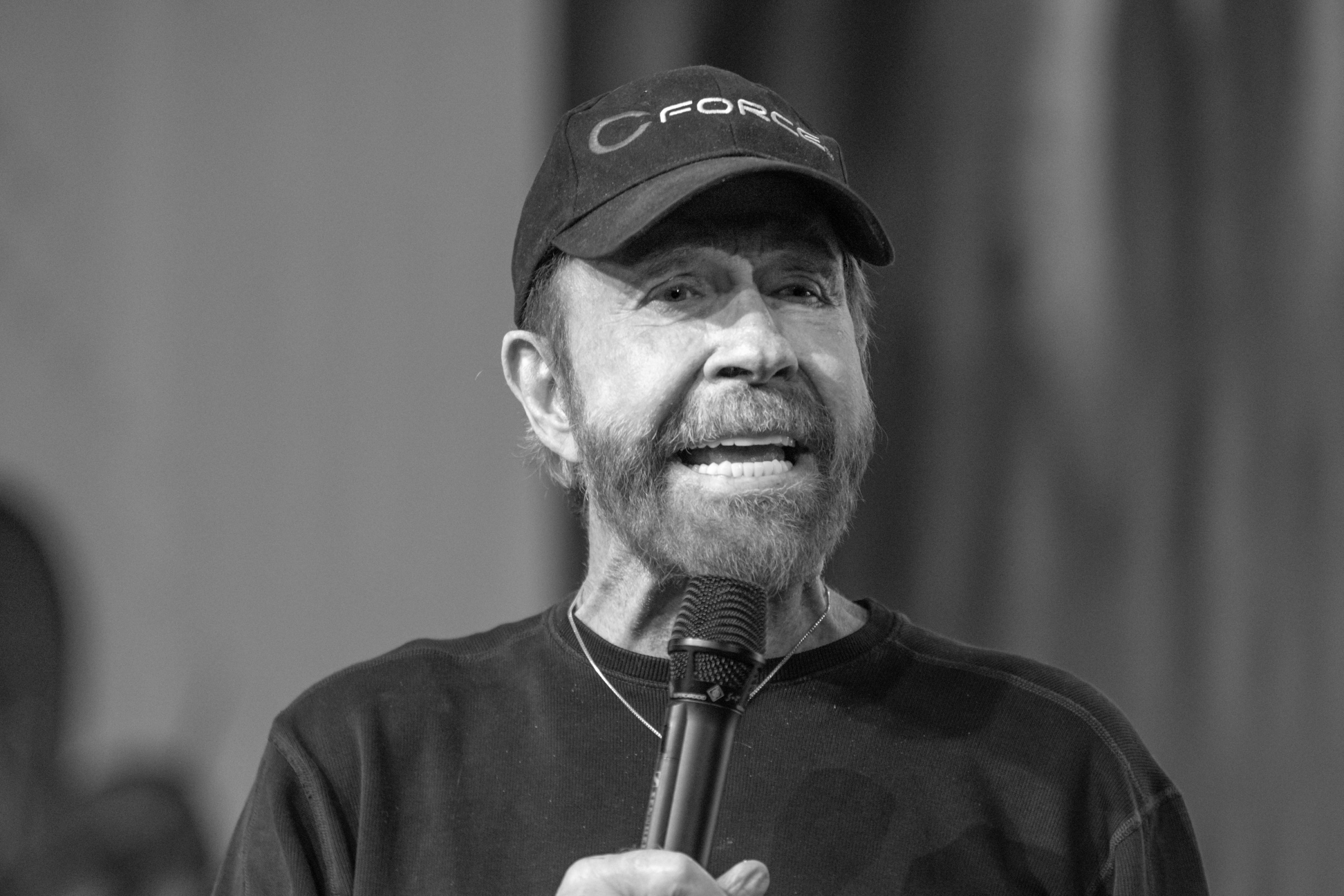
Chuck Norris’s death was confirmed by his family on March 20, one day after he died at age 86. They said he was surrounded by loved ones and at peace. However, the family did not disclose the cause of death. That announcement ended decades of public fascination with one of action entertainment’s most durable figures.
The actor’s passing quickly became a major entertainment story because his career stretched across several eras of fame. First, he was a championship martial artist. Then, he became a film and television star. Later, he turned into an unlikely internet phenomenon through the “Chuck Norris Facts” meme wave.
From Karate Champion To Screen Presence
Norris was born Carlos Ray Norris on March 10, 1940, in Ryan, Oklahoma. He began studying martial arts while serving in the U.S. Air Force in South Korea. After returning home, he built a reputation as a karate instructor and tournament competitor. Reports said he became a six-time undefeated World Professional Middleweight Karate Champion.
That foundation shaped everything that followed in entertainment. Steve McQueen encouraged him to move toward acting, according to obituary coverage. Soon, Norris turned his fighting credibility into a screen persona built on toughness and discipline. Therefore, his film career never felt detached from his real-life martial arts background.
One of his earliest major film landmarks came in Bruce Lee’s 1972 movie “The Way of the Dragon.” That appearance helped introduce him to wider audiences. In later years, he became closely associated with action titles such as “Missing in Action,” “The Delta Force,” and “Invasion U.S.A.” Consequently, he became one of the most recognizable action stars of the 1980s.
“Walker, Texas Ranger” Made Him A Household Name
Chuck Norris’s death also resonated because of how thoroughly “Walker, Texas Ranger” embedded him in television culture. The series ran from 1993 to 2001 and expanded his audience far beyond action-movie fans. On television, his image shifted from hard-edged film hero to dependable weekly icon. That role made him a household name for an entire generation.
The show’s popularity helped preserve his status long after the peak of the 1980s action cycle. While many stars from that era faded into obscurity, Norris remained familiar to mainstream viewers. Moreover, the series gave him a more family-friendly visibility than some of his film work. As a result, his public image grew broader and more durable.
His legacy extended beyond acting credits alone. Reports said he created the martial arts system Chun Kuk Do. He also founded Kickstart Kids, a program that teaches children discipline and self-respect through martial arts. Therefore, his entertainment fame often sat beside a strong service-oriented identity.
Internet Fame Gave Him A Second Cultural Life
In the 2000s, Norris experienced an unusual second wave of popularity online. The viral “Chuck Norris Facts” jokes transformed him into an exaggerated symbol of invincibility. Although the meme format was absurd, it kept his name alive for younger audiences. In entertainment terms, very few actors receive that kind of unexpected cultural afterlife.
That internet revival mattered because it changed how later generations encountered him. Some first knew him as a meme before discovering his films or television work. Yet the joke worked only because his old screen persona was already so clear. The memes amplified a reputation that action cinema had built over decades.
Even near the end of his life, Norris still projected vitality. On March 10, his 86th birthday, he posted a video of himself sparring and joking, “I don’t age. I level up.” That clip was widely recirculated after news of his death. Consequently, it became part of the public memory surrounding his final days.
Tributes Reflect A Rare Cross-Generational Reach
Norris’ death drew immediate tributes across entertainment, sports, and martial arts circles. Coverage described him as a hero to fighters, actors, and longtime fans. That response reflected how many different cultural lanes he occupied at once. He was an action star, a martial arts figure, a television icon, and an internet legend.
His family’s public statement emphasized faith, love, and privacy. Reports said he is survived by his wife and five children. That personal framing contrasted with the larger-than-life image that surrounded him in public. Nevertheless, it helped ground the story in family loss rather than celebrity mythology.
Chuck Norris’s death closes a career that remained unusually flexible across changing media eras. He succeeded in tournaments, films, television, charity work, and digital culture. Few entertainment figures bridge those worlds so completely. For that reason, his death feels like the end of a specific kind of American action stardom.