


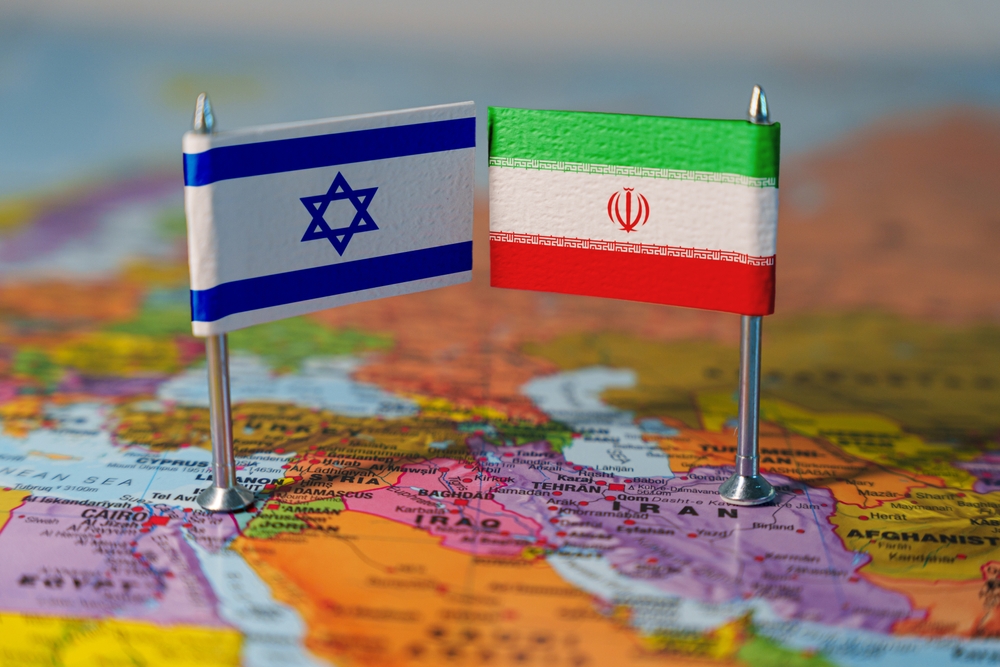
The war involving Iran, Israel, and the United States entered a more dangerous phase as Iranian officials issued fresh threats against any American ground deployment and new fronts opened across the Middle East. Iran’s parliament speaker, Mohammad Bagher Qalibaf, said Iranian forces were ready for U.S. troops on the ground and warned that Tehran would punish Washington’s regional partners as well. His remarks came as about 2,500 U.S. Marines arrived in the region and diplomatic efforts gathered in Pakistan in an attempt to contain a conflict that is increasingly spilling across borders.
The stakes now stretch far beyond the battlefield. Fighting has disrupted oil and gas flows, rattled global markets, aggravated fertilizer shortages, and complicated air travel. Iran’s grip over the Strait of Hormuz has become a central pressure point for the global economy, while the entry of Iran backed Houthi rebels has deepened concerns that another vital shipping corridor, the Bab el Mandeb Strait, could also come under renewed threat. About 12% of world trade typically passes through that Red Sea route, making any sustained disruption a global commercial shock.
What is emerging is not just an expanding military confrontation, but a broader regional crisis touching energy, transport, diplomacy, and civilian security all at once. The latest developments show how quickly this conflict is moving from a war of strikes and retaliation into a test of how much instability the region and the global economy can absorb.
Missile threats and widening fronts
Israel said its military was striking what it described as military infrastructure across Tehran, while Iranian missile launches toward Israel continued. Sirens sounded in areas near Israel’s main nuclear research center and again around Beersheba, underlining how frequently major strategic areas are being targeted. Israel also said it intercepted two drones launched from Yemen, a sign that the conflict is no longer confined to the original combatants.
The Houthis’ entry into the war is especially significant because their involvement brings renewed danger to Red Sea shipping routes. If attacks resume in or around the Bab el Mandeb Strait, already fragile supply chains could face another severe blow. That risk comes on top of the uncertainty surrounding Hormuz, where tanker access has become a key issue in both diplomacy and military signaling.
The broader front is expanding elsewhere too. Israel said it would widen its invasion of southern Lebanon, while officials there report that more than 1,200 people have been killed and over 3,500 wounded in the fighting. A U.N. peacekeeper was also killed and another critically wounded in southern Lebanon, highlighting the danger now facing even international monitoring forces operating near the frontier.
Energy and shipping risks hit the global economy
The energy market remains one of the clearest indicators of how alarmed investors have become. Benchmark Brent crude rose above $116 a barrel early Monday after starting the war at just over $70 on Feb. 28, a jump of more than 50%. That sharp increase is feeding concerns not only about fuel costs, but also about inflation, industrial inputs, and the broader cost of moving goods worldwide.
The threat is not limited to oil. Natural gas flows, petrochemical production, and fertilizer markets are all under strain as critical infrastructure comes under attack or faces heightened operational risk. Iranian media reported that a petrochemical facility in the north of the country was struck, while the U.N. nuclear watchdog said satellite imagery showed severe damage at the Khondab heavy water production plant near Arak, although no declared nuclear material was present there.
Governments are already reacting to the economic spillover. Australia announced it would halve taxes on gasoline and diesel for three months, a move expected to cost the federal budget 2.55 billion Australian dollars. Fuel taxes will fall to 26.3 Australian cents per liter from Wednesday, while a separate diesel charge on heavy vehicles will be removed. Tasmania introduced free public transport, and Victoria plans to do the same from midweek, both aimed at easing pressure from fuel price spikes driven by the war.
Diplomacy competes with escalation
At the same time as military threats intensified, diplomacy remained active and often contradictory. President Donald Trump said negotiations with Iran were moving forward directly and indirectly and claimed Tehran had agreed to allow additional tankers through the Strait of Hormuz. He also floated the possibility that U.S. forces could seize Kharg Island, Iran’s main oil terminal, suggesting Washington had multiple options on the table if the crisis worsened.
That messaging has added another layer of uncertainty. Public threats of further military action have been paired with claims that negotiations are progressing, leaving markets and regional governments trying to judge whether this is a path toward de escalation or a staging ground for broader confrontation. Pakistan has positioned itself as a mediator and said it will host talks between the United States and Iran in the coming days, following meetings in Islamabad involving Turkey, Saudi Arabia, and Egypt.
Yet the rhetoric from Tehran remains confrontational. Qalibaf has maintained an aggressive posture while his profile has risen inside Iran’s leadership structure, and other Iranian military voices have gone further by declaring that the private residences of U.S. and Israeli officials in the region are now legitimate targets. Those threats suggest that even if talks advance, the battlefield logic of the war is still moving in the opposite direction.
Civilian fallout spreads across the region
The humanitarian and civilian consequences are also broadening. Kuwait said an Iranian attack on a power and desalination plant killed an Indian worker, even though authorities said water and electricity supplies remained stable. Desalination facilities are essential across Gulf states, and attacks on them raise the risk of turning military escalation into a direct threat to daily civilian life.
American linked institutions are also taking precautions. The U.S. Embassy in Baghdad warned that Iran and allied militias may target universities associated with the United States in Iraq, while the American University of Beirut moved classes online as a precaution. Similar fears are spreading across the region as educational institutions, transport systems, and critical utilities adjust to the possibility of further strikes.
Beyond the military exchanges, this is becoming a war defined by how many systems it can destabilize at once. Shipping lanes, fuel markets, universities, desalination plants, and religious sites are all being drawn into the conflict. As diplomacy struggles to keep up with escalation, the war is no longer just reshaping the Middle East security map. It is beginning to test the resilience of the region’s economic and civilian infrastructure in real time.