


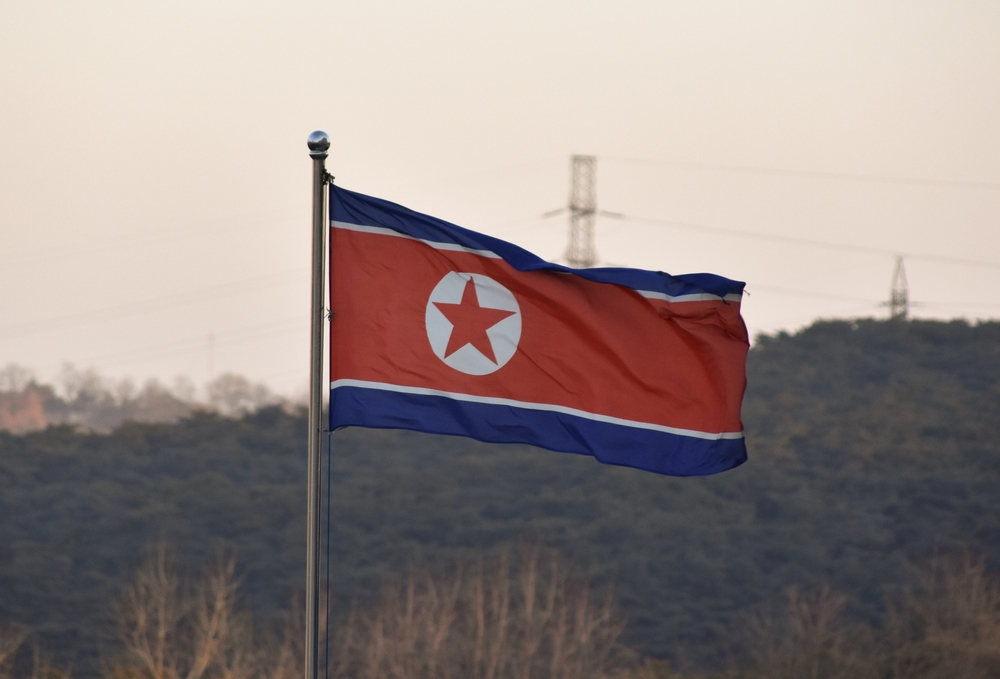
North Korea offered an unusually positive response to South Korean President Lee Jae Myung after he expressed regret over drone incursions across the border, marking a rare moment of rhetorical easing between two governments whose relations have deteriorated sharply in recent years. The exchange stands out because it interrupts a long period of hostility in which Pyongyang repeatedly described the South as its most hostile enemy and moved further away from the old language of eventual reunification.
Lee’s remarks came after he said at least two drone incidents involving flights into North Korean airspace had been carried out by civilians acting in violation of official government policy. He described the actions as a form of revolt against South Korea itself and said an investigation found involvement by a National Intelligence Service employee and an active duty military official. His government then formally expressed regret that unnecessary military tensions had been caused by what he called irresponsible and reckless actions.
That message appears to have landed in Pyongyang more constructively than many observers might have expected. In a statement carried by state media, Kim Yo Jong, the influential sister of North Korean leader Kim Jong Un, called Lee’s response fortunate and wise, language that sharply contrasted with the aggressive tone that has defined inter-Korean relations for much of the past several years.
Lee’s apology was framed as a constitutional issue
Lee did not present the drone incidents as a diplomatic misunderstanding alone. He tied them directly to South Korea’s own constitutional and political order, saying the actions violated the country’s prohibition on provocations against the North. By using that language, he framed the incidents not as unofficial acts that could simply be ignored, but as unacceptable breaches of national discipline and state responsibility.
That approach was important because it allowed him to distance his administration from the incidents while also signaling seriousness to Pyongyang. Rather than treating the flights as marginal behavior by rogue actors, he emphasized that they ran against both state policy and legal principle, making regret more credible in the eyes of the North.
He also made clear that the incursions were not the intention of his government. That distinction matters in a climate where even small border incidents can quickly escalate into broader military or political crises, especially between two states that remain technically at war.
Pyongyang’s response breaks with years of hostility
North Korea’s reaction was notable not just for its content, but for its tone. Kim Yo Jong said Lee’s comments were appreciated as very fortunate and wise, and described Kim Jong Un as viewing the gesture as the attitude of a frank and broad minded man. Coming from one of the regime’s main voices on foreign policy, the statement amounted to an unusually public acknowledgment that Seoul had acted in a way Pyongyang found acceptable.
That is a sharp departure from the rhetoric North Korea has directed at the South in recent years. Pyongyang has repeatedly cast Seoul as a permanent enemy and argued that the idea of future unification no longer had meaning under current conditions. Against that backdrop, even a limited sign of approval carries diplomatic weight.
It does not mean relations are suddenly improving in a fundamental way. But it does suggest North Korea sees some value in responding positively when Seoul takes steps that lower tension rather than inflame it.
The drone issue had become a dangerous flashpoint
The background to the exchange is serious. North Korea has said drones from the South violated its airspace and described the incidents as a grave provocation, claiming it had shot them down. In the current state of relations, such accusations can quickly take on outsized significance because the military and political trust between the two sides is already extremely low.
That helps explain why Lee moved to address the matter directly and publicly. Border tensions on the Korean Peninsula are rarely treated as isolated episodes. They are usually interpreted through the broader lens of deterrence, escalation, and political signaling, particularly when airspace violations are involved.
By acknowledging the incidents and expressing regret, Lee appears to have aimed at preventing the issue from becoming a larger crisis. North Korea’s restrained response suggests that, for now, the effort may have succeeded in cooling what could otherwise have become a more serious confrontation.
Lee is trying to reopen a path to calmer relations
Since taking office in June, Lee has made several overtures toward North Korea, arguing that peace is the best route to prosperity for both sides. His handling of the drone controversy fits that broader strategy. Rather than answering Pyongyang with a defensive or confrontational message, he chose to acknowledge the tension and try to contain it through political accountability and public regret.
That approach comes at a time when ties between the two Koreas are among their worst in decades. The Korean War ended in an armistice, not a peace treaty, leaving both sides technically still at war. In such a setting, even modest diplomatic openings can matter, especially when they show that communication, however limited, is still possible.
The latest exchange does not amount to a breakthrough. But it does hint at a different tone from both sides, at least temporarily. For Lee, that may strengthen his argument that lowering tension remains possible through restraint and engagement. For Pyongyang, the statement allows it to acknowledge Seoul’s gesture without giving up its broader hard line. In the current climate, that alone is a meaningful shift.