


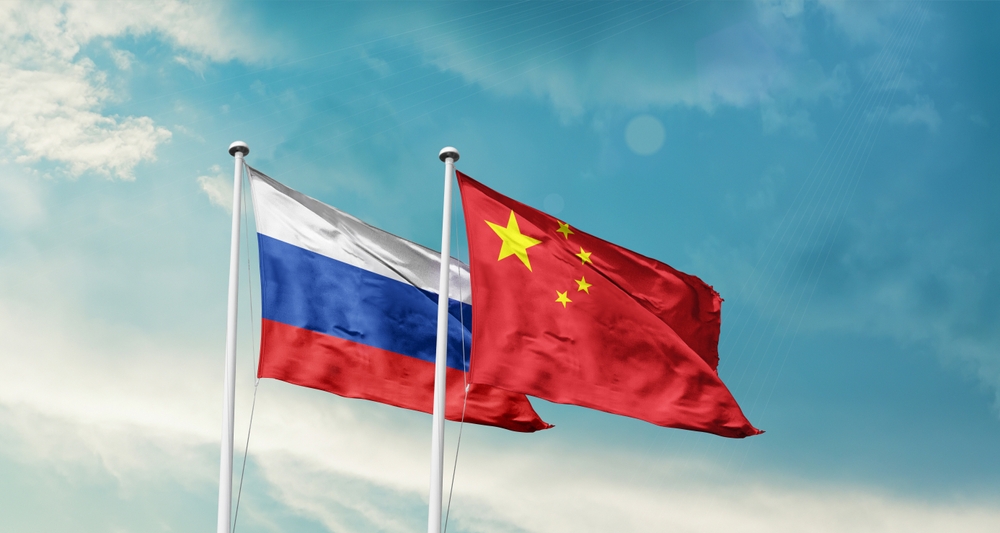
China and Russia blocked a U.N. Security Council resolution aimed at encouraging countries to coordinate defensive efforts to protect commercial shipping in the Strait of Hormuz, exposing a deep divide among major powers over how to respond to one of the most dangerous flashpoints in the current Middle East conflict. The failed vote came at a highly sensitive moment, with oil markets already under strain and Washington increasing pressure on Tehran to reopen the waterway.
The resolution, presented by Bahrain, secured broad support from most council members, but that backing was not enough to overcome the veto power of Beijing and Moscow. Their opposition halted an effort that supporters said was designed to safeguard civilian commerce and humanitarian flows through one of the world’s most important maritime routes. For critics of the draft, however, the text was still too one-sided and risked being used to legitimize more pressure on Iran.
The episode underlines a broader problem facing the international community. Even when the economic and strategic stakes are obvious, agreement on how to respond remains elusive if the major powers do not share the same view of the conflict itself. In this case, the deadlock leaves the future of shipping through Hormuz more dependent on unilateral action and ad hoc coalitions than on any unified U.N. framework.
The vote showed broad support but no consensus
The 15-member Security Council voted 11 in favor of the resolution, with China and Russia voting against and two countries abstaining. That result was enough to demonstrate that the measure had significant support, but under U.N. rules, opposition from a permanent member is enough to stop adoption. Bahrain’s foreign minister acknowledged that the text failed solely because of a negative vote from one of the council’s permanent powers, though in practice two vetoes were cast.
The defeat is notable because the proposal had already been softened considerably before reaching the vote. Bahrain and other supporters had tried to reduce the risk of a veto by removing the most contentious enforcement language, hoping a more limited and defensive approach could still command agreement. Even after those changes, however, the split remained too deep to bridge.
That outcome suggests the disagreement was not simply about technical wording. It reflected a more fundamental clash over how the war, Iran’s actions, and the appropriate international response should be interpreted.
The draft had already been watered down
The final version of the resolution no longer authorized force. Earlier references to binding enforcement were also removed. Instead, the text strongly encouraged states to coordinate defensive efforts suited to the circumstances in order to help guarantee safe navigation through the Strait of Hormuz.
It specifically referred to measures such as escorting merchant and commercial vessels and supporting efforts to deter interference with international passage. That framing was intended to make the proposal look narrower, more defensive, and less likely to be seen as an open-ended mandate for military escalation.
Even so, the changes were not enough. The fact that a heavily diluted version still failed shows how politically charged the issue has become. By the time the vote was held, the dispute was no longer mainly about the mechanics of protecting shipping. It had become inseparable from the wider battle over how the conflict with Iran is being framed and managed.
Washington framed the vetoes as support for Tehran
The United States reacted angrily to the vote. U.S. ambassador Mike Waltz said the Chinese and Russian vetoes marked a new low and accused both countries of siding with a regime that was holding the global economy hostage by keeping the strait effectively shut. He argued that the disruption was not only hurting energy markets, but also obstructing the movement of medical supplies and humanitarian goods.
Waltz used the failed vote to sharpen Washington’s broader message that other countries should join U.S. efforts to secure the waterway. He said Iran still had the option of reopening the strait, pursuing peace, and making amends, but until then, responsible nations should help protect lawful commerce and the movement of essential goods.
France also criticized the vetoes, arguing that the purpose of the draft had been to support strictly defensive measures without triggering further escalation. That response highlighted how backers of the text wanted to portray it as a practical safety measure rather than a step toward wider intervention.
China and Russia said the resolution was unfair
China and Russia defended their decision by arguing that the draft was biased against Iran. Chinese diplomats said adopting such a resolution at a moment when the United States was issuing extreme threats against Tehran would have sent the wrong political message. Russia took a similar line, saying a more balanced alternative should address the broader Middle East situation as well as maritime security.
From their perspective, even a defensive resolution on shipping could not be separated from the larger conflict. Both governments appeared concerned that any U.N. action focused narrowly on Hormuz would increase international pressure on Iran while downplaying the role of military threats and broader regional escalation.
Iran welcomed the vetoes. Its ambassador said the move had prevented the Security Council from being used to legitimize aggression, making clear that Tehran saw the resolution not as a neutral shipping measure, but as part of a wider effort to isolate and pressure the country diplomatically.
Hormuz remains the unresolved center of the crisis
The failed vote leaves the Strait of Hormuz at the center of both the military and economic crisis. The route previously handled about a fifth of the world’s oil and liquefied natural gas flows, which means even partial disruption has immediate consequences for energy prices, shipping costs, and inflation expectations worldwide.
With no Security Council resolution in place, there is now no U.N.-backed mechanism encouraging coordinated protective action. That does not prevent countries from acting on their own or through coalitions, but it does remove the political cover and multilateral legitimacy that a successful vote might have provided.
The broader consequence is that the world is left with a more fragmented response to a global chokepoint. Instead of a shared international position, the future of navigation through Hormuz will now depend on a mix of national calculations, regional diplomacy, and the evolution of the war itself. For markets and governments alike, that is unlikely to be a reassuring outcome.