


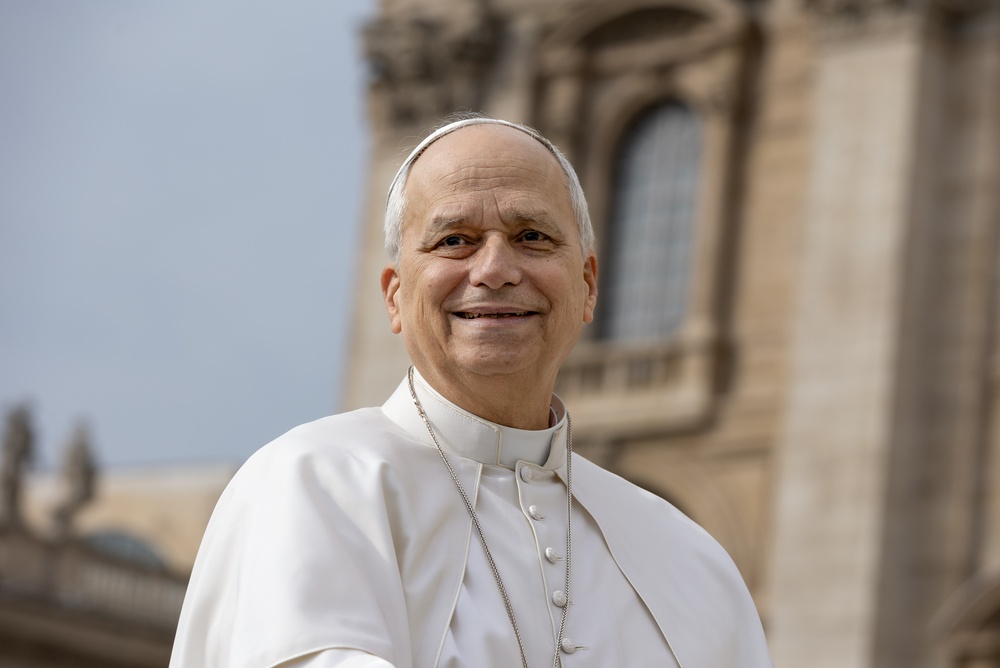
Pope Leo XIV has opened the longest trip of his pontificate with a stop in Algeria, sending a clear signal about where he sees the Catholic church’s momentum, urgency and future. The visit is not simply a diplomatic gesture or a symbolic stop on a crowded itinerary. It is the first chapter of a broader African tour that places the continent at the heart of Leo’s early priorities as pope.
That choice carries weight. Africa is one of the fastest-growing regions in global Catholicism, while many parts of western Europe continue to see declining religious participation and aging congregations. In demographic terms, the church’s center of gravity is shifting, and Pope Leo appears determined to acknowledge that reality not in abstract speeches from Rome, but through physical presence on the ground.
The decision also reveals something about the tone of his papacy. Leo is using this journey to speak about peace, coexistence and religious freedom, while also highlighting communities that often sit at the margins of global political attention. In that sense, the trip is pastoral, geopolitical and strategic all at once.
Algeria is a symbolic starting point
Beginning in Algeria was a deliberate choice. The country is not a major Catholic stronghold in numerical terms, but it carries deep historical and theological significance. It is the land of Saint Augustine, one of the most important figures in Christian thought, and that connection matters especially for Leo, who is the first pope from the Augustinian order.
That link gives the visit a meaning that goes beyond present-day church demographics. By opening in Algeria, Leo is not only acknowledging Africa as the future of Catholic growth. He is also recognizing North Africa as part of the church’s ancient intellectual inheritance. The message is that Africa is not merely a mission field or a rising frontier. It is also one of Christianity’s foundational landscapes.
This layered symbolism makes Algeria a powerful first destination. It allows the pope to speak simultaneously to history, faith and the present-day relationship between Christianity and Islam.
Peace and coexistence are central themes
Leo’s first message on Algerian soil was a call for peace, and that choice was unsurprising. The backdrop to the trip includes conflict, social strain and widening international distrust. By framing his opening in terms of peace and fraternity, he is positioning the tour as a moral intervention as much as a pastoral visit.
That emphasis is especially meaningful in Algeria, a Muslim-majority country where the Catholic population is small but where interfaith coexistence carries enormous symbolic value. For church leaders on the ground, the visit is being seen as a chance to reinforce bonds between Christian and Muslim communities and to strengthen a climate of mutual respect.
Leo is also continuing a line associated with his predecessor. Francis made interreligious dialogue a defining part of his international outreach, and this trip suggests that Leo intends to keep that legacy alive while placing his own Augustinian and African emphasis on it.
Africa is becoming more central to Catholic life
The deeper importance of the trip lies in the continent itself. Africa is one of the few places where Catholicism is not just holding steady, but expanding rapidly. New dioceses continue to be created, the number of faithful is increasing and the continent is becoming more central to the church’s pastoral and institutional future.
This is why the tour matters so much. It recognizes that the church cannot continue behaving as if its most important reference points remain in the old centers of European power. The vibrancy of Catholic life is increasingly found elsewhere, and Africa is one of the clearest expressions of that change.
By placing Africa at the forefront so early in his papacy, Leo is making a statement about where the church should listen more carefully, invest more deeply and think more seriously about its future identity.
The trip also carries a political message
The route itself speaks volumes. Algeria, Cameroon, Angola and Equatorial Guinea present very different political and religious realities, yet together they form a map of many of the pressures shaping contemporary Africa: conflict, inequality, governance problems, migration, interfaith relations and questions of human dignity.
Leo’s decision to make this African tour his longest so far also gains significance when viewed against where he is not going. That contrast has been widely noticed. Without making the point explicitly, the pope appears to be telling the world that the peripheries are not secondary in his vision. They are where some of the most important moral and ecclesial conversations now belong.
This gives the trip a broader resonance. It is not simply an itinerary of visits. It is a ranking of attention, and Africa is being placed very high.
The visit is pastoral, but not narrow
While the language of the journey is spiritual, its implications are much wider. Leo is using the tour to support communities facing conflict, economic hardship and political neglect, while also insisting on broader values such as religious freedom, human fraternity and peace. That makes the visit more than a routine papal appearance before local crowds.
The pope is presenting the church as a partner to people living under pressure, not just as a guardian of doctrine. That is particularly important in places where institutions are weak, social trust is fragile and religious communities often operate within wider environments of tension or marginalization.
For many Catholics across Africa, the symbolism will be powerful. The pope is not simply speaking about them from afar. He is beginning one of the defining journeys of his pontificate by going to them first. That alone explains why this tour is being read not as a ceremonial visit, but as a declaration of priorities.