


Kyiv fields requests from U.S. and regional partners
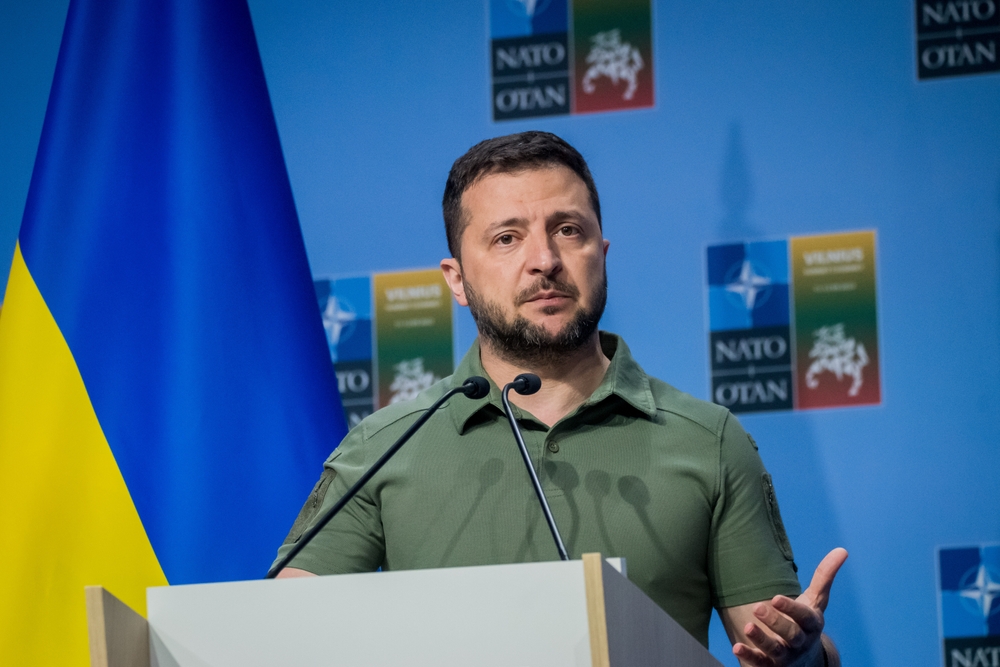
Ukraine is being asked to share its experience defending against Iran’s Shahed drones as the same weapons used in Russia’s campaign against Kyiv appear in the widening Middle East conflict, according to President Volodymyr Zelenskyy. He said late Wednesday that multiple countries, including the United States, have approached Ukraine for assistance, and that he has held talks in recent days with leaders from the United Arab Emirates, Qatar, Bahrain, Jordan and Kuwait about possible cooperation.
Zelenskyy framed any support as conditional. He said Ukraine would help only if doing so does not weaken its own defenses and if it strengthens Kyiv’s diplomatic position in seeking an end to Russia’s invasion. “We help to defend from war those who help us, Ukraine, bring a just end to the war” with Russia, he said.
Later Thursday, Zelenskyy said he had received a U.S. request for help defending against drones in the Middle East and ordered that equipment be provided alongside Ukrainian experts. He did not specify what systems would be sent or where they would be deployed. President Donald Trump, speaking to Reuters, said he would accept assistance from any country.
Ukraine points to four years of mass Shahed attacks by Russia
Ukraine’s pitch is built on combat experience. Russia has fired tens of thousands of Shahed drones at Ukraine since launching its full-scale invasion more than four years ago, Zelenskyy said. He cited a recent barrage in which Russia launched more than 800 drones and decoys in its largest nighttime swarm. The Middle East conflict has seen Iran deploy the same type of drones against countries in the region after joint U.S.-Israeli strikes.
The repeated attacks have forced Ukraine to adapt air defenses to a threat defined by low-cost platforms used in large volumes, where traditional air defense interceptors can be expensive relative to the incoming targets. That pressure has driven experimentation across detection, electronic warfare and rapid interception methods.
Low-cost interceptors draw attention as allies rethink air defense
Zelenskyy said Ukraine has developed low-cost drone killers that can cost as little as $1,000, a capability he suggested is now drawing international interest. Ukrainian manufacturers have built interceptor drones designed specifically to hunt Shaheds, and Zelenskyy said the sector is expanding quickly enough to generate surplus capacity.
He has previously said Ukraine would begin exporting the battle-tested systems. The appeal is partly economic, as many governments face constraints on using high-end assets to counter inexpensive drones. The challenge was underscored last September when Poland scrambled high-value military equipment including F-35 and F-16 fighter jets and Black Hawk helicopters in response to airspace violations by cheap drones, highlighting the mismatch between the cost of defense and the cost of attack.
Ukraine’s approach is also being discussed in European diplomacy. Kaja Kallas, the European Union’s top diplomat, said ahead of a meeting of EU and Gulf foreign ministers on Thursday that the talks would examine how Ukraine’s experience could help countries counter Iranian drones.
Middle East war postpones U.S.-brokered Russia Ukraine talks
Zelenskyy said the war with Iran has diverted global attention and contributed to a delay in U.S.-brokered talks between Russia and Ukraine that had been planned for this week. With the Iran war in its sixth day, he said there were not yet the necessary signals for a trilateral meeting, but he suggested the format could resume once the security and political context allows.
Prisoner swaps remain one of the few concrete outcomes from previous diplomatic contacts. Zelenskyy thanked the United States for the return of 200 Ukrainian prisoners of war from Russia on Thursday. Russia’s Defense Ministry said it received the same number of prisoners from Ukraine and credited the United States and the United Arab Emirates with mediation. Russian negotiator Vladimir Medinsky said a total of 500 prisoners from each side would be exchanged between Thursday and Friday.
Oleksandr Merezhko, head of Ukraine’s parliamentary foreign affairs committee, said President Vladimir Putin is trying to slow negotiations while continuing the invasion and avoiding additional U.S. sanctions. He urged Washington to view the Russia-Ukraine war and the Middle East conflict as connected, arguing that Russia and Iran cooperate on weapons supply and defense industry development.
Battlefield updates show localized gains despite long front line
Ukraine’s military situation remains fluid along the roughly 1,250-kilometer front line. The Institute for the Study of War said Ukrainian forces have recently pushed back Russian troops in some areas and that localized counterattacks liberated more territory than Ukraine lost during the last two weeks of February. The Washington-based think tank estimated the recovered territory at about 257 square kilometers since Jan. 1.
Zelenskyy’s comments suggest Kyiv is attempting to translate battlefield-earned expertise into broader security relationships, while using any support to partners as leverage in its effort to sustain defenses at home and keep diplomatic pressure on Moscow.