


U.S. Defense Secretary Pete Hegseth said on Friday that Iran’s new supreme leader, Mojtaba Khamenei, is “wounded and likely disfigured,” framing the claim as proof that Iran’s leadership is under extreme strain after days of U.S. and Israeli attacks.
Claims About Leadership and Control
Speaking at a Pentagon briefing, Hegseth portrayed Iran’s leadership as cornered and operating from underground. He pointed to the fact that Khamenei’s first public message appeared as a written statement read on Iranian state television. He argued that the lack of an on-camera appearance suggests fear and limited freedom of movement.
Hegseth’s comments marked the first on-the-record statement by the Trump administration about the new leader’s condition since Iran’s leadership transition. The transition followed the killing of Ayatollah Ali Khamenei at the outset of the war, according to the material provided.
Behind the public messaging, President Donald Trump also discussed Khamenei’s condition with leaders of the G7 during a virtual meeting on Wednesday, according to sources cited in the report. Trump reportedly said Khamenei was “not in good shape,” and suggested Iran’s chain of command may be unclear.
In a separate interview that aired Friday morning, Trump said he believed Khamenei was probably alive but injured. The White House remarks, combined with Hegseth’s briefing, signaled a coordinated effort to question the stability of Iran’s leadership at a moment when Tehran has promised retaliation.
U.S. Pressure Expands Beyond the Battlefield
The administration paired the leadership narrative with a new pressure tool. The U.S. State Department announced it will offer up to $10 million for information on Khamenei and nine other senior officials in Iran’s regime, according to the report. The list includes figures tied to national security, intelligence, internal affairs, and the IRGC, alongside other senior names.
This move broadens the conflict’s framing from a military campaign to a wider effort aimed at Iran’s ruling structure. It also introduces a new layer of risk for diplomacy, because such rewards can be read as an escalatory signal by the targeted government and its allies.
At the same time, Iran’s messaging has emphasized defiance. Khamenei’s first statement, read on state television, vowed revenge for ongoing attacks. Hegseth cited that statement as evidence of weakness, not strength, arguing that Iran would normally use video if the leader were able to appear publicly.
Degraded Capabilities and the Hormuz Question
Hegseth also presented a set of battlefield claims. He said Iran’s missile launch capability had been reduced by 90% and its ability to launch drones had been reduced by 95% as of Thursday. The report does not detail the underlying methodology for these figures, but the administration is using them to argue that Iran’s capacity to continue the fight is shrinking fast.
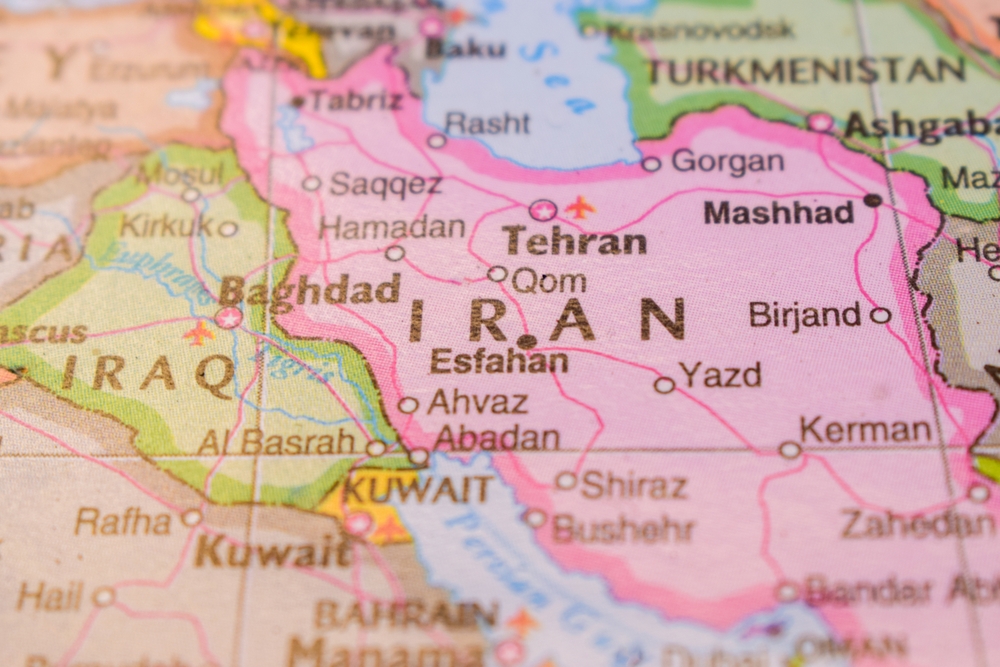
The Pentagon briefing also addressed the Strait of Hormuz, which remains central to global energy markets and supply chains. Iran has threatened to restrict or close the passage, and U.S. officials have repeatedly tried to calm fears. Hegseth described the issue as something the U.S. is “dealing with,” while still acknowledging that Iran is preventing most commercial traffic.
Gen. Dan Caine, the Chairman of the Joint Chiefs of Staff, said some commercial traffic is still moving through the strait, but most is being blocked. Hegseth added that the U.S. chose the destruction of Iran’s navy as a primary objective, tying maritime security to the broader military plan. His message was that Washington will not accept a long-term disruption to commercial flows in that corridor.
The Hormuz angle matters because it links battlefield developments to inflation, shipping costs, and consumer prices. Even partial disruption can raise insurance costs, reroute shipping, and tighten energy supply. That can quickly spill into broader economic conditions, which is why U.S. officials are speaking about the strait in strategic terms.
What to Watch Next
Two tracks now appear to be moving in parallel. One is operational: whether Iran’s leadership can coordinate sustained retaliation while under pressure, and whether the U.S. claims about degraded missile and drone capabilities hold up over time. The other is political: whether the administration’s public focus on Khamenei’s condition and its new reward offer changes the incentives for Iran’s next moves.
Iran’s decision to rely on a written statement may be a temporary communications choice, or it may reflect real constraints. Either way, Washington is trying to turn that ambiguity into leverage. The risk is that ambiguity can also fuel escalation, particularly if both sides interpret public messaging as a test of resolve.