


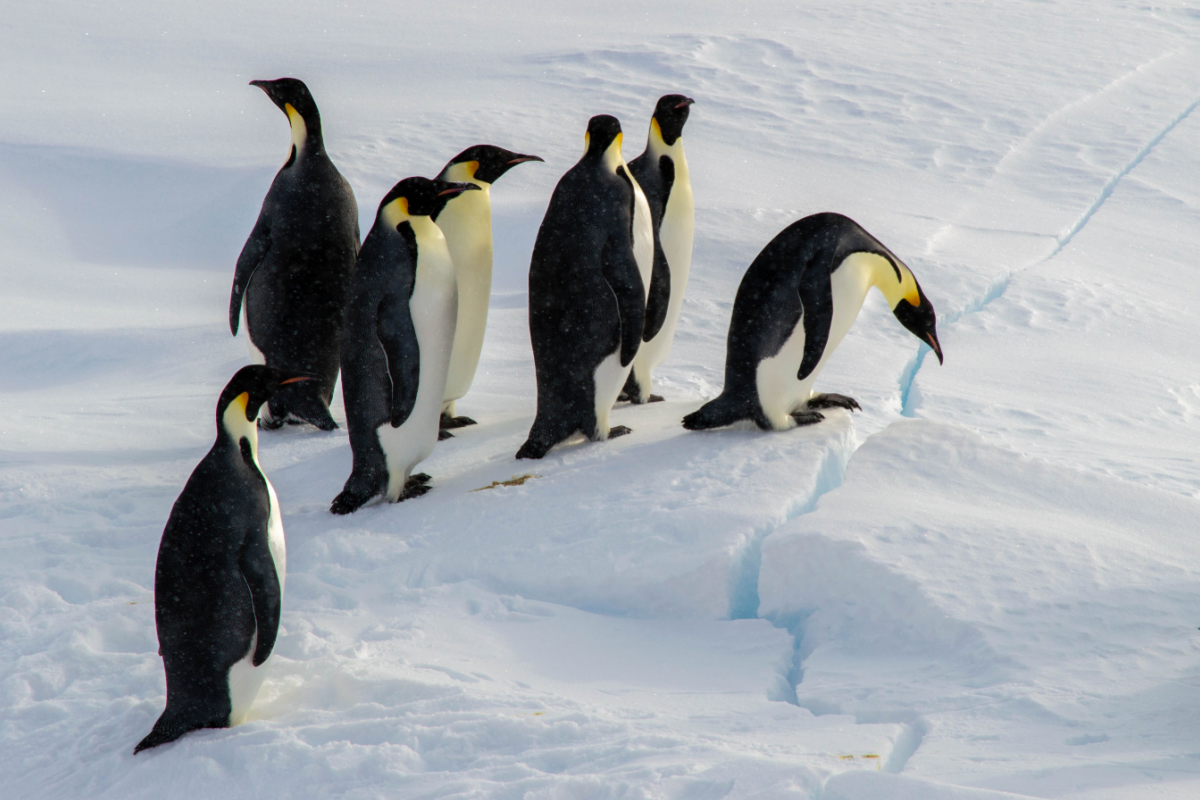
New discoveries point to a fragile moment in the penguins’ year
Scientists have identified new locations in Antarctica where emperor penguins gather for their annual molt, using satellite imagery to spot groups in places researchers rarely reach on the ground. The findings add important new detail to a life stage that is both critical and dangerous for the species, and they also raise fresh concerns about how quickly climate impacts may be tightening around the birds.
The molt happens around late January, when emperor penguins move to stable sea ice attached to the coastline. During this period, they shed and replace all their feathers in one intensive cycle, a process researchers describe as catastrophic molting because penguins lose their waterproof protection until new feathers grow in.
Why molting is so risky for emperor penguins
Molting is a high-energy event. Over roughly four to five weeks, emperor penguins can lose 40 to 50 percent of their body weight while they shed old plumage and grow new feathers. The danger is not just the energy drain. Without waterproof feathers, they cannot enter the ocean to forage, meaning they must remain on the ice while becoming progressively hungrier and weaker.
This is one reason molting has been understudied. The penguins can travel deep into remote ice areas, often forming smaller groups spread across enormous distances, making them difficult to locate and monitor.
How researchers found the new sites by accident
Peter Fretwell, a senior geographic and remote-sensing scientist at the British Antarctic Survey, discovered the new molting sites while examining satellite images for breeding colonies. In February images, he noticed “strange brown stains” that resembled penguins. Because the timing aligned with the molting season, he concluded these were not breeding birds but molting groups.
In one case, the satellite record suggested a troubling pattern. As Fretwell reviewed images across multiple years, he observed sea ice cover declining while penguins were still molting in the area. The implication is severe: if the ice retreats while birds are mid-molt, they may be forced into the water without waterproof feathers.
Melting sea ice may be collapsing beneath molting penguins
The study cannot confirm how many penguins died, but the risk is clear. Entering freezing water without waterproof plumage, especially after weeks of fasting and weight loss, can lead to hypothermia and death. The possibility that sea ice is retreating beneath penguins during this vulnerable window suggests the climate threat may be more immediate and more complex than previously recognized.
This adds to a broader concern already documented by earlier research: emperor penguins rely heavily on sea ice, and ongoing sea ice declines could drive steep colony losses later this century. The new findings suggest that beyond breeding challenges, molting itself may become a more frequent failure point if ice conditions become less stable at exactly the wrong time of year.
What this changes and what comes next
The discovery raises urgent questions researchers now want to answer: how often does sea ice retreat during molting, how many birds are affected, how many survive, and whether the same pattern is occurring elsewhere across Antarctica. The satellite approach also offers a practical advantage, allowing scientists to monitor vast regions repeatedly, even when field access is limited.
For conservation efforts, the message is blunt. If molting sites are becoming unreliable due to warming-driven ice loss, the window for protecting emperor penguin populations could be shorter than assumed, and the need for stronger climate action becomes even more tightly linked to their survival.