


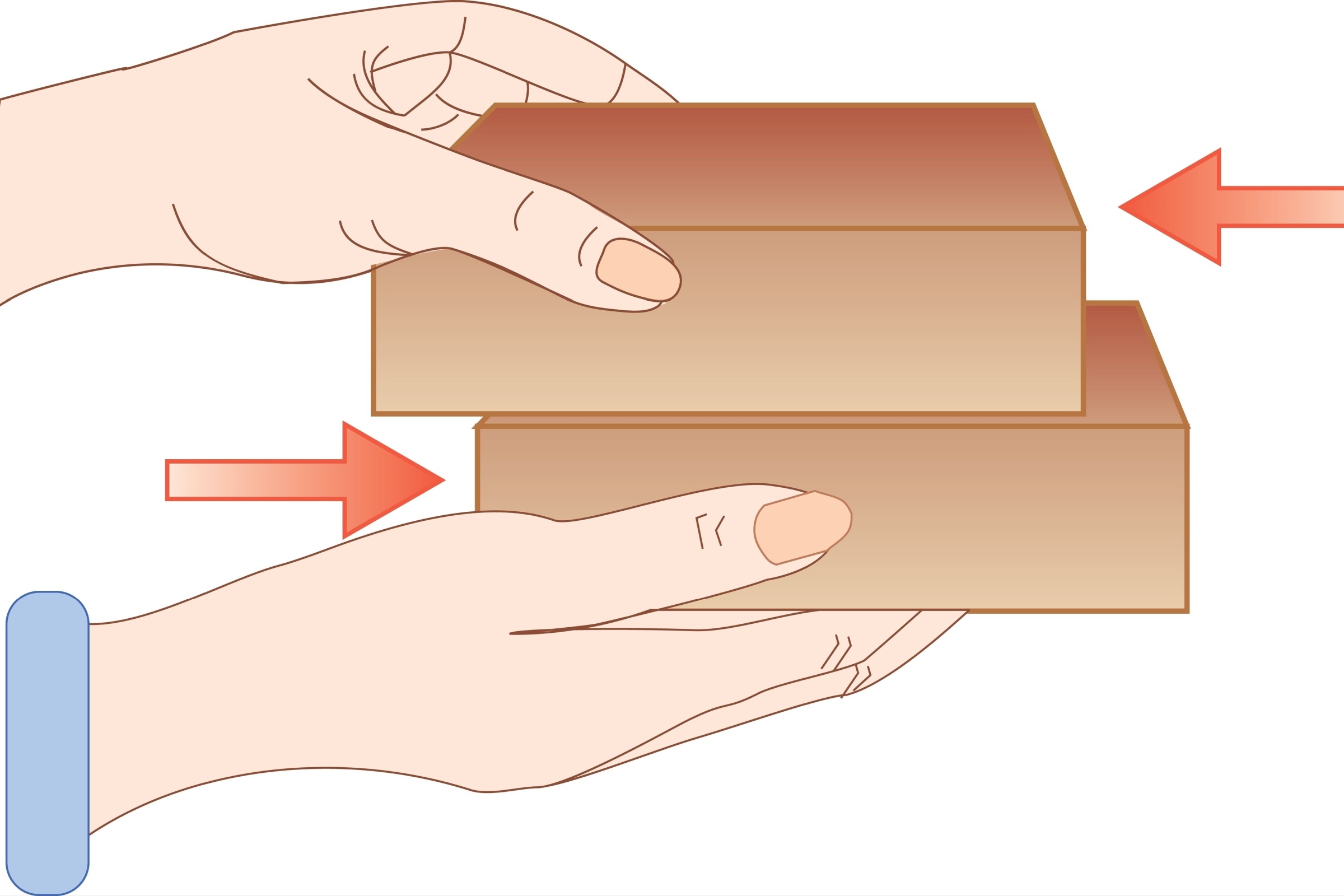
Researchers in Germany say contactless magnetic friction can arise even when two surfaces never touch. In a new tabletop experiment, scientists at the University of Konstanz showed that two magnetic layers can resist sliding through magnetic interactions alone. The result challenges the standard picture of friction, which usually depends on surface roughness, wear, and microscopic points of contact.
The study also breaks with one of the oldest empirical rules in physics. For more than 300 years, Amontons’ law has described friction as increasing steadily with load, meaning that greater pressure should produce greater resistance. But in this magnetic system, friction did not rise in a simple, steady way. Instead, it reached a clear peak at certain distances between the layers.
Magnets Reorganized as the Layers Slid
To test the effect, the team built a system with a two-dimensional array of freely rotating magnetic elements above a second magnetic layer whose magnets stayed fixed. The two layers never made physical contact. Still, as they moved relative to each other, the upper magnetic elements kept reorienting in response to the lower layer.
By changing the gap between the layers, the researchers controlled the effective load. They then watched how the magnetic structure changed during motion. The strongest contactless magnetic friction did not appear when the layers were closest or farthest apart. It emerged at intermediate distances, where magnetic interactions were strongest.
Competing Magnetic Orders Drove the Energy Loss
The team says the effect comes from magnetic frustration. The upper layer tends to favor one kind of alignment, while the lower layer favors another. As the layers slide, those competing preferences force the magnetic moments to switch back and forth between incompatible arrangements. That repeated reorganization dissipates energy and creates friction.
The paper describes the switching as hysteretic, meaning the system’s current state depends partly on its past history. That history-dependent rearrangement helps explain why friction peaks instead of increasing smoothly. In this case, energy loss arises from internal magnetic changes, not from direct surface contact.
The Discovery Could Matter Beyond the Lab
The researchers say the finding could open new avenues for studying both friction and magnetism. Because the underlying physics does not depend on scale, similar effects may appear in atomically thin magnetic materials, where even small movements can change magnetic order. That could make friction measurements a new tool for probing collective spin behavior.
The work may also point to practical uses. Scientists say contactless magnetic friction could support technologies that need tunable resistance without wear, such as micro- and nanoelectromechanical systems, magnetic bearings, vibration isolation systems, and adaptive damping devices. The study appeared in Nature Materials, and the team says the broader message is simple: friction does not always require surfaces to rub at all.